When your Alocasia (Elephant Ear)’s leaves disappear, you might worry, “Maybe revival is impossible now?”
However, with the right environment and care restored, your plant has a very good chance of bouncing back and growing strong again.
In this article, I’ll explain the causes of your Alocasia losing leaves, how to tackle each issue, and effective revival methods.
Causes of Alocasia Leaf Loss
Leaf loss can stem from a range of issues, but you might be dealing with one of the following. For each factor, I’ll give you a deep dive on what’s going on and how to fix it.
Inadequate Watering Frequency
From spring through fall, the rule of thumb is to water thoroughly once the soil surface has dried out!
Your Alocasia does enjoy a good drink, yet overwatering or letting it become too dry can make its leaves wither and drop like nobody’s business.
Constantly soggy soil? That’s a one-way ticket to root rot – your leaves will yellow and tumble off before long.
On the flip side, if it’s too dry for too long, your leaves will droop from thirst.

Remedies
- Watering tip: Aim to water about 2–3 days after the soil surface dries out, pouring until you see water trickle from the pot’s drainage holes.
- Winter watering: Growth takes a holiday in winter, so hold off watering until a few days after the soil dries, keeping your plant in its natural dormancy zone.
- Use a moisture meter: If probing the soil daily feels like a chore, I recommend a Soil Moisture Meter (Check Price on Amazon). Pop it in your soil, and you’ll get a color-coded read on moisture levels.
Cold (below 50 °F [10 °C])
Your Alocasia is pretty chill-averse—low temps can really stunt its growth.
If your room dips below roughly 50 °F (10 °C), you’re looking at a high risk of leaf die-back, possibly losing them in a flash.
Remedies
- Heat mat: Slip a heat mat (Check Price on Amazon) under the pot to keep those roots cozy.
- Winter temp control: Keep indoor temps at least 59 °F (15 °C), and steer clear of cold drafts by the window or front door.
- Gentle heat + humidity: Pair a gentle heater with a humidifier to fend off dryness, but don’t crank up the heat too much.
Direct Sunlight or Insufficient Light
Keep it in the dark and it’ll stretch its stems like a lanky teenager reaching for the sun.
Alocasia thrives in bright, indirect light—too little and it droops; too much direct sun and it’ll scorch.
Remedies
- Ideal spot: Indoors, aim for a bright, breezy location by a south- to east-facing window. You usually don’t need sheer curtains, but if you see leaf burn, hang one up.
- Grow light: In winter or gloomy rooms, pop on a plant LED grow light to beat the low-light blues.
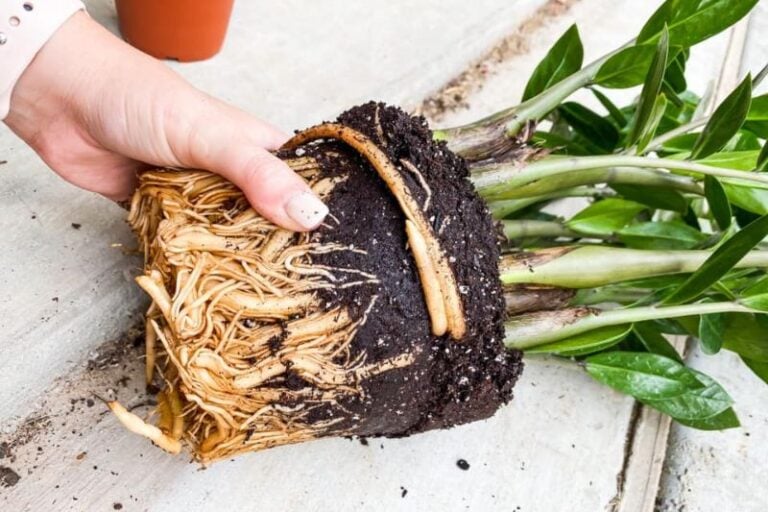
Rootbound
If your Alocasia sits in the same pot for ages, its roots will get all tangled up and become rootbound.
When that happens, nutrients can’t get in, your leaves yellow, and off they drop.
Remedies
- Repotting timing: Repot every 1–2 years in spring—upgrade to a slightly larger pot so those roots can stretch out and breathe.
- Soil choice: Pick a well-draining, airy potting mix to keep things from getting soggy and sour.
Pests and Diseases
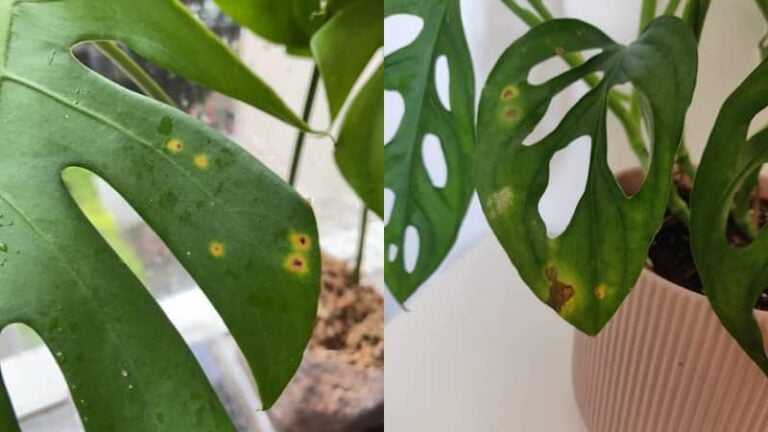
Watch out if your leaves are patchily discolored or you find spiderwebs on the undersides!
Alocasia isn’t safe from pesky visitors like spider mites or aphids either. Once those bugs latch on, your leaves lose their pep, withering before dropping off.
Remedies
- Grab a bottle of Bonide Insecticidal Soap (Check Price on Amazon) it tackles common houseplant bugs and diseases in one spray.
- Regular inspections: Make it a habit to flip and check those leaves and stems; if you spot anything funky, zap it right away.
- Early intervention: If you do find bugs, hit them early with the right spray to keep them from staging a comeback.
How to Revive an Alocasia That Has Lost Its Leaves
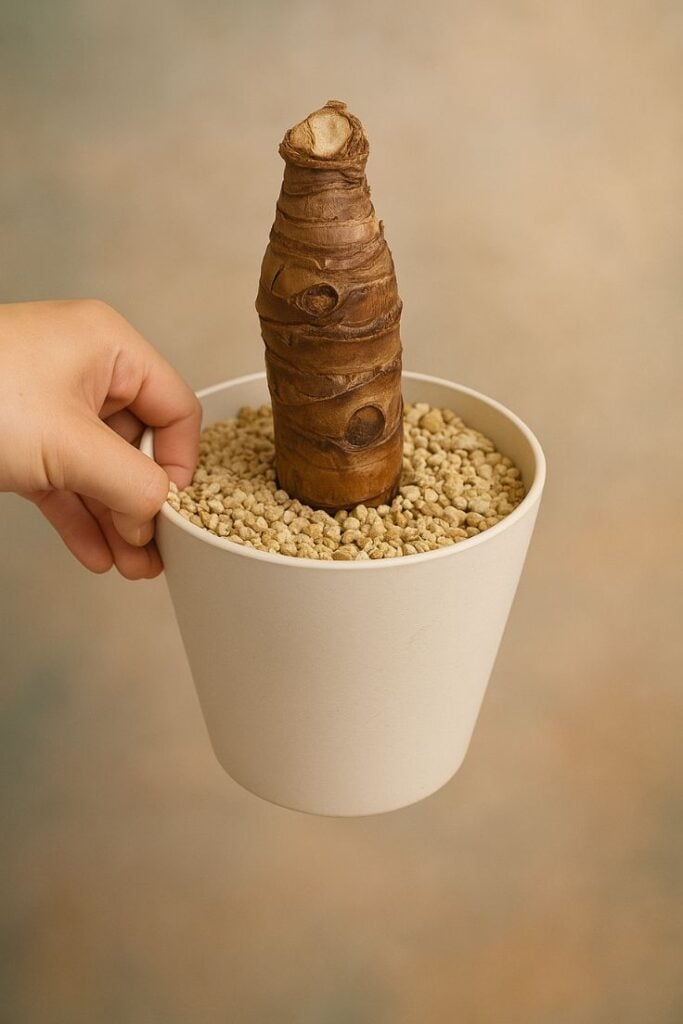
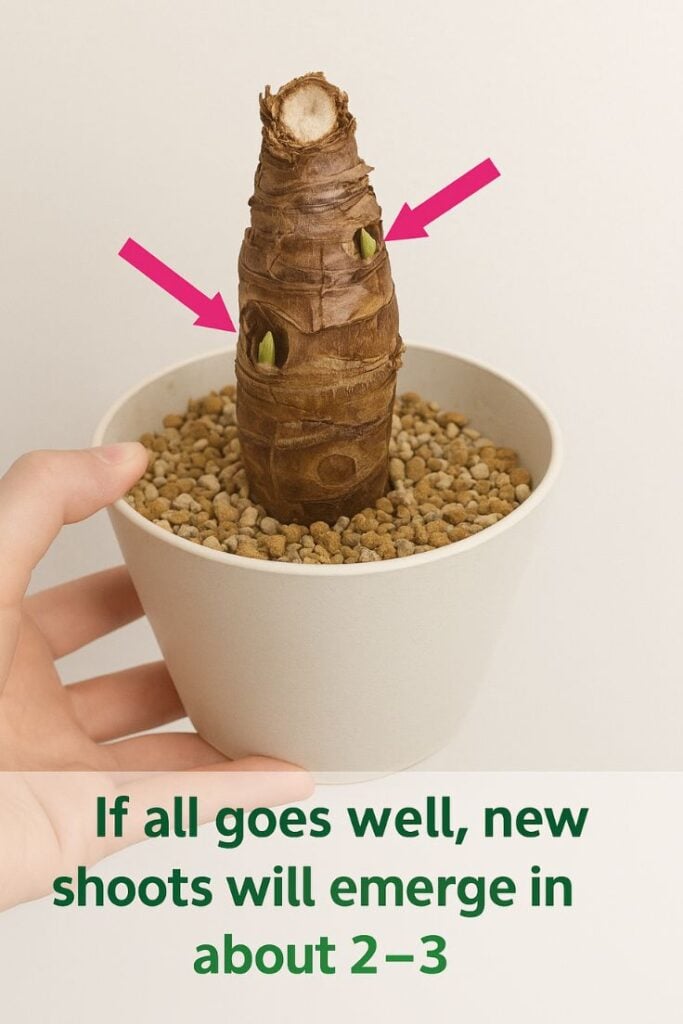
Even if your Alocasia is completely leafless, as long as its roots and stem are healthy, there’s hope. Try these steps to coax new leaves out and get it looking vibrant again.
Dormancy-Friendly Care
When your plant is leafless, nailing its dormancy phase and prepping for recovery is crucial.
Keep it cozy and humid to support its natural rest cycle.
- Light: In winter’s dim days, popping on a plant grow light can really help.
- Temperature: Keep things above 59 °F (15 °C) and dodge any sudden cold snaps.
Pruning to Encourage New Shoots
Once you see signs of life, feel free to prune stems where needed.
Cutting back old growth focuses energy on those fresh sprouts popping up at the base.

Timing for Fertilizer Use
Don’t rush to feed a leafless plant—it could backfire.
Wait until it enters its spring to early summer growth spurt, then ease in fertilizer little by little.
- Liquid feed: Once growth hits, a monthly dose of diluted liquid fertilizer works wonders.
- Slow-release granules: Mix a pinch in when you repot for a steady supply of nutrients.
3 Key Points to Regenerate a Leafless Alocasia
Nailing these key care steps is vital for keeping your Alocasia happy and healthy over the long haul. Make these routines part of your daily plant TLC.
Watering Management
Adjust your watering based on leaf color and soil moisture—winter’s the time to be extra cautious about soggy soil.
Air Circulation
Breeze things up with a fan or open windows to keep the air moving—this wards off pests and diseases. Keeping humidity up also makes for a happier plant.
Regular Leaf Misting
Your plant craves humidity on its leaves too. Give them a gentle mist with a spray bottle and wipe the leaves now and then to keep them squeaky clean.
Summary: Causes, Remedies & Revival Methods for Leafless Alocasia
Even if your Alocasia has lost every leaf, with the right diagnosis and remedies, it can bounce back to vibrant life. Start by fine-tuning your watering, temperature, and light routines, and stick to regular care. Be patient—give it time, and you’ll soon be greeted by fresh, lively leaves again.