Unfortunately, the queen of flowers is quite susceptible to various fungal diseases, among which powdery mildew, rust, coniothyrium, and Marssonina are most common. Today, we will talk in more detail about the latter disease, also known as “black spot.”
As we’ve already mentioned, this disease occurs because of the activity of a microscopic fungus, and if no timely measures are taken, severely affected plants may be left completely without leaves and will greatly slow their development.
So let’s figure out together—how not to miss the development of rose black spot, which preventive measures should be taken, and how to fight the fungus.
Marssonina of Roses – Causes and Identification
The pathogen of the disease is the fungus Marssonina rosae, after which the disease is named “Marssonina.” It affects the leaves, and more rarely the green shoots.
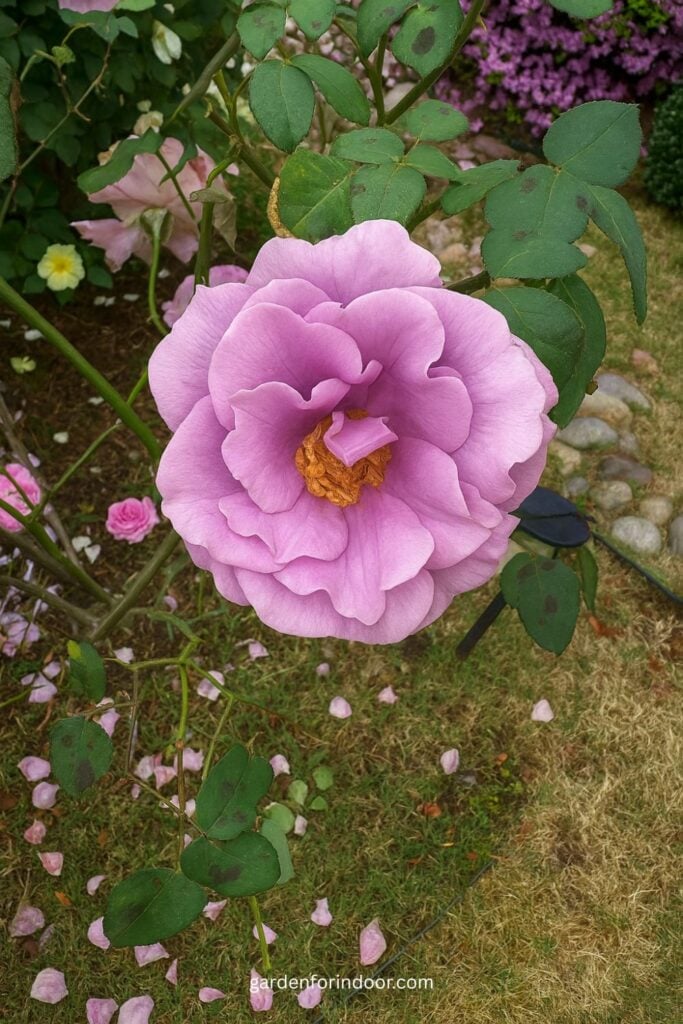
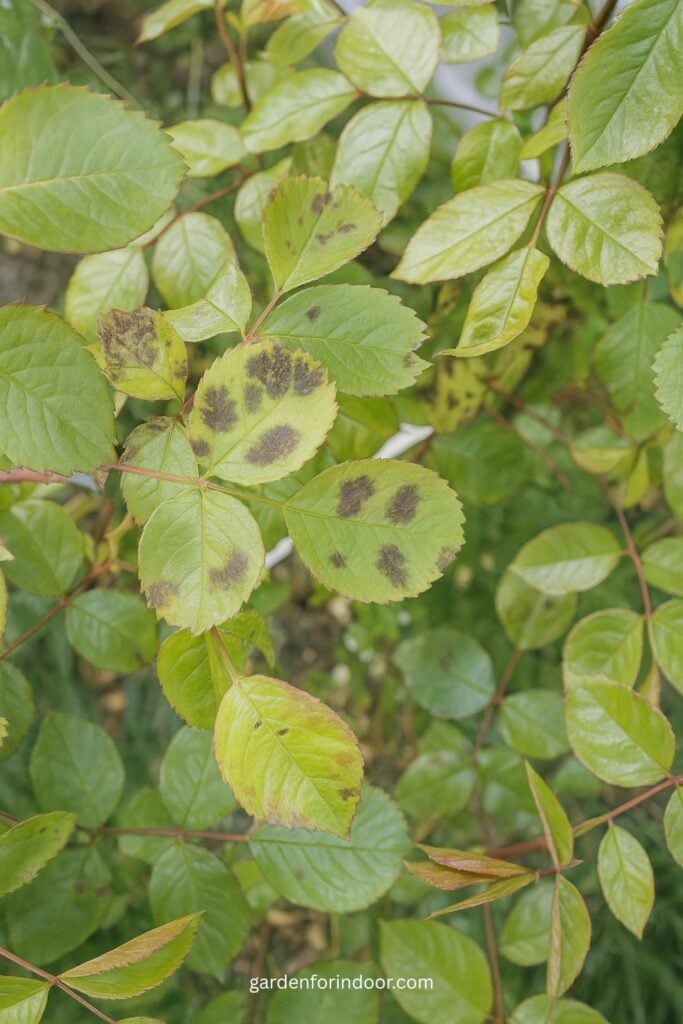
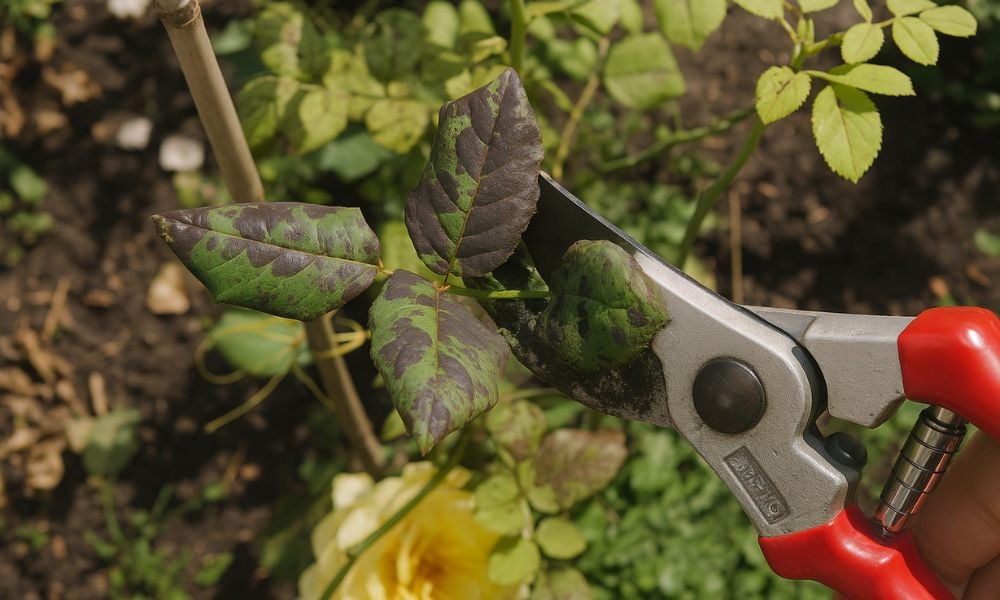
Prominent signs of the disease are round, purple-white radiating spots without clear edges on the upper side of the leaf (the disease usually starts on the lower leaves), on which numerous fruiting bodies in the form of blackish scabs appear over time.
Then the spots darken sharply, and the affected leaves turn gray-brown, curl up, and fall off en masse. As a result, the rose loses its decorative appeal, the development of young shoots slows dramatically, and the plant loses cold hardiness.
In addition, a plant weakened by Marssonina becomes more susceptible to other pathogens and diseases.
The fungus overwinters in its ascospore stage in fallen leaves or in infected plant tissues, and infects roses in the spring, waiting for favorable conditions.
Fungal development is favored by warm, humid weather (68–81°F (20–27 °C)) in early to mid-summer, and Marssonina easily spreads to neighboring plants via dew, rain, and wind, producing spores every three weeks.
So if one rose bush is affected, be sure to inspect its neighbors closely to catch the disease at an early stage and save your rose bed.
Black Spot of Roses – Prevention and Treatment
How can you fight black spot, or better yet—prevent it from appearing in your garden in the first place?
- Choose resistant varieties. If your region’s summer climate is consistently warm, humid, and rainy, consider planting varieties known here in the U.S. for their resilience: Knock Out, Drift, Peace, Iceberg, Double Delight, Julia Child.
- Mulch and space properly. Mulch the soil under the bushes, avoid overcrowding (closely planted specimens ventilate poorly and are easily infected), and refrain from excessive use of nitrogen fertilizers—especially in the second half of summer. Also, avoid wetting the leaves when watering.
- Sanitary pruning. In spring, perform timely and proper sanitation pruning: remove diseased and weak shoots, and thin out the bush. When the disease appears, promptly strip off affected leaves. In fall, collect and burn all infected and fallen leaves, as they are the main source of infection in spring.
- Fall soil care. In late autumn, after temperatures drop, lightly cultivate the soil to help freeze out the fungus. Treat the soil for winter with a copper-based remedy such as Bonide Copper Fungicide to destroy overwintering spores in the ground.
Homemade Remedies
As soon as you notice the first subtle symptoms, you can try these home treatments before moving on to stronger chemicals:
- Garlic infusion:
- Finely chop 17.6 oz (500 g) of garlic heads, pour into a pot with 1.32 gal (5 L) of warm water.
- After 1 hour, strain the water into a separate container and add 1 qt (1 L) of clean water to the garlic pulp.
- Wait another hour, combine both liquids, and add 4.23 qt (4 L) of water.
- To spray your plants, mix 1½ cups of this ready infusion in a bucket of water.
- Cow-manure tea:
- Dilute cow manure in water at a 1:20 ratio, let it steep for a couple of days, then spray the bushes. Repeat weekly until the spots disappear.
- Dilute cow manure in water at a 1:20 ratio, let it steep for a couple of days, then spray the bushes. Repeat weekly until the spots disappear.
- Ash dusting:
- Regularly dust young plants with wood ash during the growing season.
- Biological fungicides:
- Use plant-immune-boosting bioproducts such as Trichoderma root treatments (e.g., BioWorks RootShield), seaweed extracts (e.g., Neptune’s Harvest), or other U.S.-available biologicals.
Chemical Controls
If there’s no improvement and the fungus continues to spread, you’ll need to use fungicidal sprays:
- Alternate weekly applications of a famoxadone + cymoxanil product such as Tanos (Syngenta) and a triazole product like Bonide Infuse (myclobutanil).
- You may also use Inspire Super (difenoconazole + cyproconazole) in rotation.
- Limit treatments to a maximum of three sprays per season.
As you can see, by following these simple preventive measures and proper care, it’s quite possible to almost completely avoid the unpleasant black spot disease on your roses.