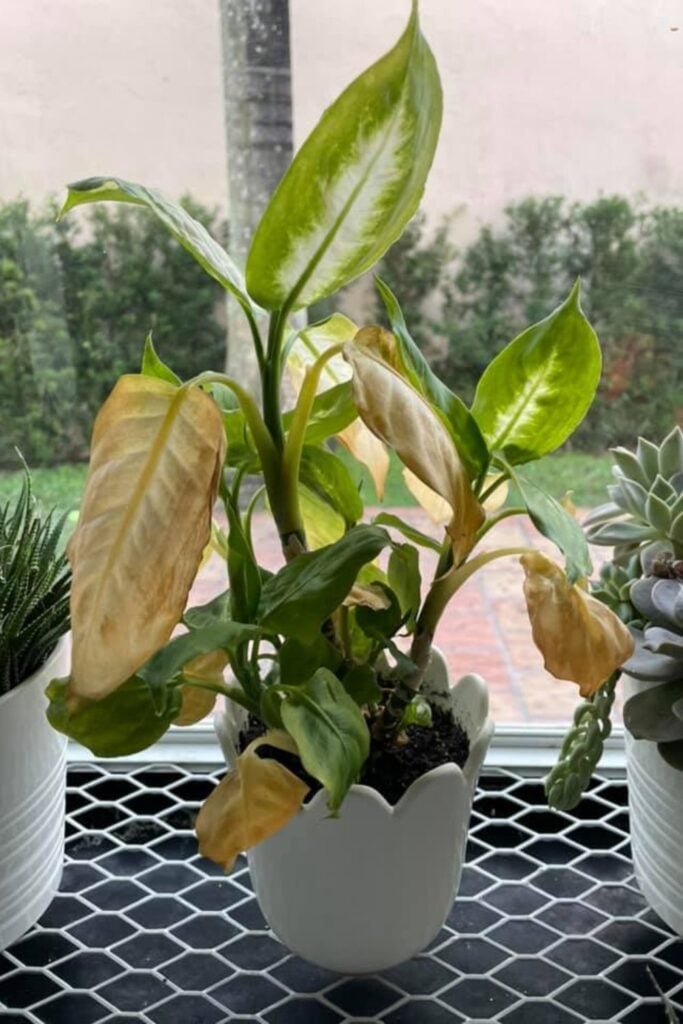
Just like many other monocot plants, the development of dieffenbachia involves the formation of new leaves at the top of the stem while older leaves near the bottom gradually die off, leaving the trunk bare. By the plant’s second year, its lower leaves often begin to turn yellow, dry out, and fall away—this is a natural process.
Still, there are times when its leaves suddenly begin to yellow. The reasons for this unwelcome surprise can vary greatly. Generally, they fall into several categories: care issues, diseases, and insect pests.
Common Causes of Yellow Leaves
Because dieffenbachia comes from a humid tropical environment, it has some serious requirements when you try to grow it indoors.
You’ve got to understand that its leaves may turn yellow if it doesn’t get enough light, if temperatures get too low, or if the chosen potting mix and watering regimen aren’t just right.
Lighting: Avoid Direct Sunlight, Ensure Bright Indirect Light
Dieffenbachia prefers well-lit areas and needs about 10-12 hours of daylight each day. That’s why, from November to February (late fall through winter in many parts of the U.S.), it often requires supplemental lighting with grow lamps.
While this plant loves bright, diffused light, it absolutely can’t stand direct ultraviolet rays. Intense, direct sunlight can cause leaf burn—leading to dried-out, brownish spots surrounded by yellowing areas.
To fix the situation, cut off any yellowed leaves since they won’t recover. Then move the plant to a better spot, ideally on a south- or east-facing windowsill, where it can enjoy bright, indirect light. Trust me—dieffenbachia will quickly grow new leaves and reward you with its vibrant color for a long time.
Watering: Balance Between Overwatering and Underwatering
Overwatering is one of the most common reasons leaves turn yellow. When the plant receives too much water, it disrupts oxygen flow in the soil, causing the roots to rot. As a result, the plant can’t get the nutrients needed for proper photosynthesis and rich green foliage. Alongside yellowing leaves, you may also notice blackened roots, a slippery greenish surface on the soil, and a strong, unpleasant smell when watering.
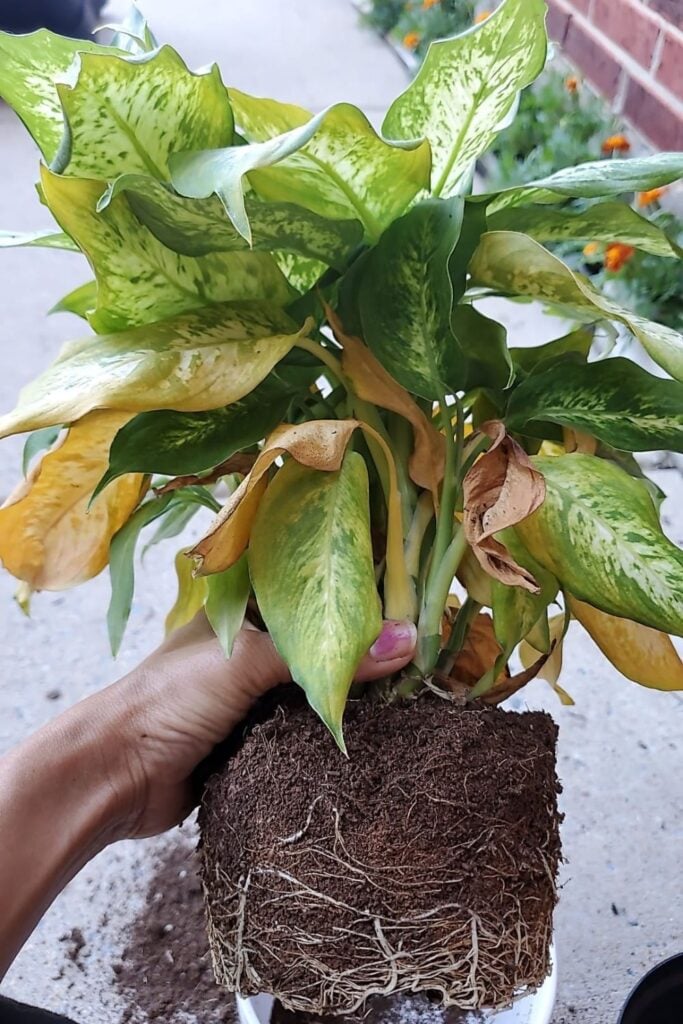
Unfortunately, in most cases, leaf yellowing due to overwatering goes hand in hand with fungal infections. You need to act fast, or your dieffenbachia is doomed. Start by transplanting it into a new container with fresh potting mix, cutting away all the damaged roots.
Pay special attention to creating a good drainage layer. This helps protect dieffenbachia from excess water.
On the other hand, underwatering is no less dangerous. Letting the soil dry out too much can cause yellowing leaves and eventually kill the plant. Water as needed, when the top 2-3 centimeters (about 0.8-1.2 inches) of soil have dried out.
Another rookie mistake is using hard water. This often leads to leaf chlorosis—the leaves first become pale, then yellow, and finally fall off. To avoid this, water your plant only with spring or well-settled water and occasionally dissolve an iron chelate in it.
Soil and Fertilizers: Nutrient Deficiency or Excess
If your dieffenbachia’s lower leaves start turning yellow, it often points to a poor substrate choice or a lack of nutrients. This tropical plant prefers breathable, slightly acidic soil and responds well to humic acids. If the soil isn’t right, the root system won’t be able to supply the leaves with the nutrients they need, causing the foliage to yellow. On top of that, the plant’s growth may slow down, and new shoots often appear weak and underdeveloped.
A deficiency in potassium, nitrogen, or phosphorus can cause the top leaves to yellow. If you ignore this warning sign and don’t add the right vitamin and mineral fertilizers, all the leaves will quickly follow suit. The plant will weaken and stop growing.
However, too many nutrients can also harm the plant. For example, excess nitrogen can lead to uneven yellowing of the foliage.
It’s best to use ready-made, balanced fertilizers containing potassium and magnesium to keep your dieffenbachia happy.
Temperature: Maintain a Stable Warm Environment
Born in the tropics, dieffenbachia loves warmth. It needs a steady temperature of about 20-25°C (68-77°F) both in winter and summer. Although it can survive a short dip to 10-15°C (50-59°F), it will experience stress that leads to yellowing and dropping of all its lower leaves.
Keep in mind, frequent temperature swings can kill the plant. Look out for spots on the leaf edges and subsequent leaf drying—these symptoms indicate necrosis, which is dangerous for your plant.
Pests: Signs and Solutions for Infestations
Like any other houseplant, dieffenbachia is often attacked by pests. The most common culprits are scale insects, aphids, and mealybugs, but spider mites are especially harmful. These pests feed on the plant’s sap, draining it of life and inevitably leading to its demise. Yellowing leaves serve as a warning sign that these “uninvited guests” have arrived.

Check the leaves and stems carefully. If you find any pests on the underside, wash them off with soapy water and then treat the plant with specialized products. Getting rid of spider mites is trickier. You can’t revive the leaves they’ve damaged, so you’ll need to cut and discard them, then thoroughly rinse the remaining parts of the plant under a warm shower—just cover the soil with plastic to keep it from getting waterlogged.
If these measures aren’t enough, you’ll need to treat the plant again and consider using insecticidal soap or neem oil sprays, which are commonly available and effective in the U.S.
Diseases: Fungal, Bacterial, and Viral Threats
Yellowing leaves can be triggered by fungal, bacterial, or viral infections. They’re usually hard to identify, so let’s focus on the most dangerous ones.
Fungal Infections: Symptoms and Early Treatment
- Anthracnose: You’ll see clusters of large, dark brown, almost black spots with yellowish halos along the leaf edges. Over time, the leaf wilts and falls off.
- Root Rot: This one is sneaky since it starts at the underground root collar, forming dark patches. As it progresses, the leaves turn yellow and drop, eventually killing the entire plant.
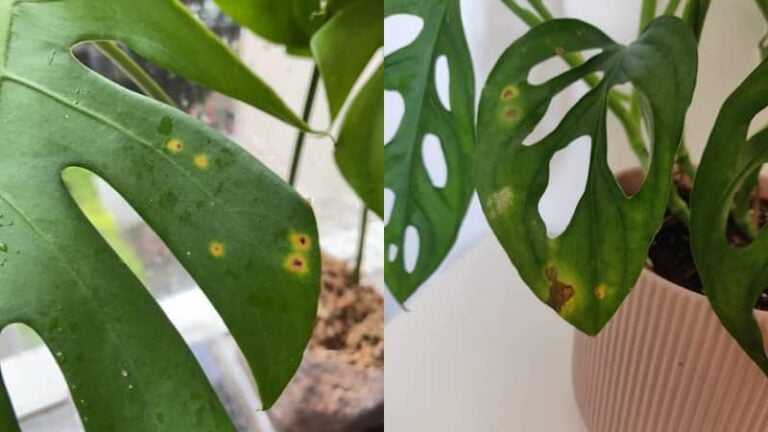
- Leaf Spot: Small brown spots with orange borders appear on the leaves. They grow larger and soon cover the whole leaf blade.
Fungal diseases often spread through damaged leaves and moisture. To prevent them, focus on using the right substrate and maintaining proper watering and temperature conditions.
It’s possible to treat fungal infections in their early stages. Remove all the affected parts, treat the plant with systemic fungicides, and place it in fresh soil. Consider switching to a new pot or disinfecting the old one.
Bacterial Infections: Leaf Blight Dangers
The main culprit here is bacterial leaf blight. You’ll notice yellow leaves with watery spots and distinct borders that eventually turn brown. Sadly, there’s no way to save a plant with bacterial blight.
Viral Infections: Detecting and Managing Bronzing
A dangerous virus called “bronzing” can alter the leaf color. Round yellowish spots form on the leaf surface, and over time those affected areas die, though the leaves remain attached to the stems. The plant’s growth stalls, and the virus spreads quickly to nearby houseplants. There’s no cure for viruses—infected plants must be destroyed.
When Yellowing Is Nothing to Worry About
Not every yellowing leaf signals disaster. If it’s just a few lower leaves drying up and the issue isn’t spreading, you’re likely just seeing the natural aging process of your dieffenbachia. In that case, relax—there’s nothing to worry about regarding the future of your green friend.