Gardeners often face challenges with petunia seedlings. Usually, these issues stem from conditions and care provided to the young plants.
If your petunias become leggy, they’ll look like mysterious vines with tiny blooms instead of developing into compact, vibrant plants. So it’s crucial to act as soon as you notice these changes.
Why Petunia Seedlings Get Leggy
Normal development of young petunias depends on multiple factors—mainly the conditions you set and how you care for them. The most common reasons why petunia seedlings grow leggy include:
- Not enough light
- Too much heat
- Dry air issues
- Overcrowded planting
- Lack of nutrients

Light and temperature deserve special attention because they’re the most frequent culprits behind leggy young petunias (and even other plants). Also, keep in mind that sowing often happens in late winter [originally February] when days are short, and even in early spring [originally March], sunlight remains limited. Humidity also plays a part.
Not Enough Light
In late winter [originally February], when petunia seeds are typically sown, natural daylight is limited. Even in early spring [originally March], the issue persists to some extent. As a result, seedlings can become leggy.
To avoid this, give your young petunias extra ultraviolet light. Ideally, use special plant grow lights (phytolamps). If that’s not possible, a fluorescent light source can help.
Note!
Some experienced growers recommend keeping a light source on from morning until late evening, and even slightly dimmed overnight, so seedlings get a continuous supply of gentle light.
Too Much Heat
When the first petunia sprouts appear, maintain a steady temperature around 64–72°F [about +18…22°C]. If it’s hotter, the young seedlings become leggy, especially if they’re not getting enough light.
Don’t place containers too close to heating vents or radiators. Even if the room’s average temperature is acceptable, the area right next to a heat source can become too warm for the seedlings.
Dry Air Issues
Dry indoor air can cause problems due to:
- Nearby heat sources
- No cover on the seedling container
- Insufficient watering
Avoid placing seed trays next to radiators. If you have no other option, increase humidity. Drip irrigation or placing a container with water-soaked lightweight aggregate (like perlite) near the seedling tray can help.
In the early stages, keep the seedlings covered. Don’t remove the plastic film or cover until the first leaves form. Afterward, regular misting will maintain moisture.
Note!
When using drip irrigation, avoid overwatering. Too much moisture can cause root rot in young plants.
Overcrowded Planting
If seeds are sown too densely, seedlings can become leggy even under good light. They compete with each other, striving for space and resources.
Prevent this by thinning out the seedlings or starting them separately from the beginning. Some experienced gardeners use peat pellets to space seeds properly.
Lack of Nutrients
In the early growth stages, petunia seedlings need proper nourishment for a strong root system and sturdy stems. Key nutrients include:
- Phosphorus: Crucial for root formation. A deficiency leads to weak seedlings that grow leggy.
- Potassium: Important for overall plant strength. Without it, stems weaken and flop over, causing legginess.
- Nitrogen: Helps build green mass quickly. Even with good light, low nitrogen affects plant vigor.
Provide balanced feeding at the right time to ensure your petunias have everything they need.
If Your Seedlings Are Already Leggy
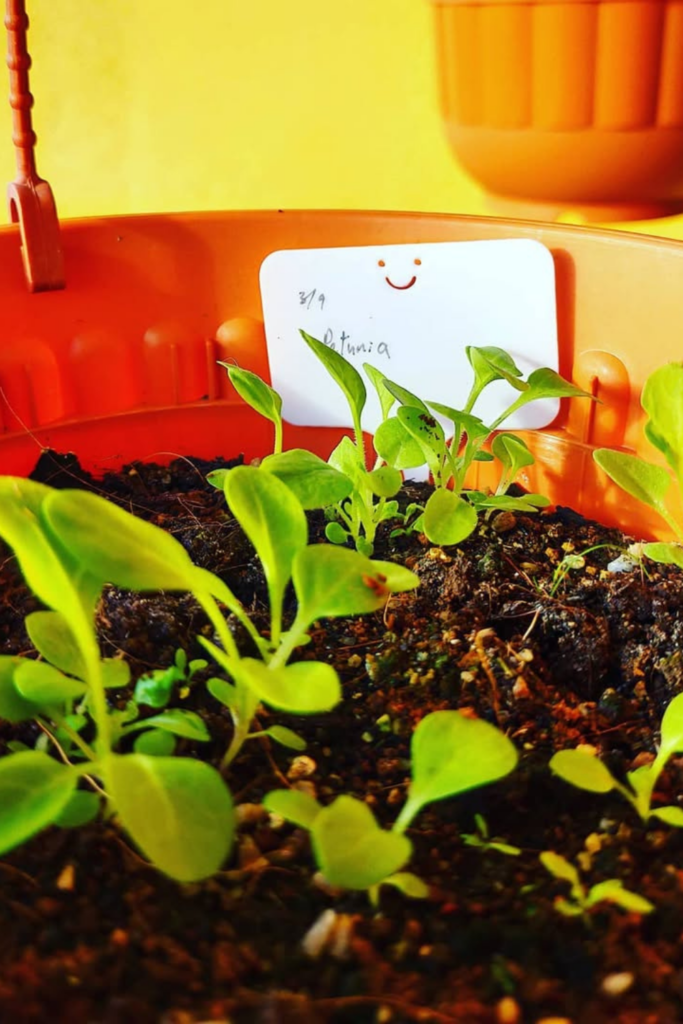
How you fix leggy petunias depends on what caused the problem. Once you correct the underlying issue (light, heat, humidity, etc.), you can address the legginess by:
- Adjusting certain care factors
- Thinning out seedlings
- Hilling up soil around elongated stems
- Pinching back tall plants
Note!
Which method you choose depends on your preferences and specific conditions. Some approaches may not be suitable for everyone.
Extra Lighting
If legginess has started but isn’t severe, extra lighting might help. Give seedlings about 12–14 hours of supplemental light each day. Suitable options include:
- Plant grow lights (phytolamps)
- Fluorescent lights
- LED strips or lamps positioned close to the tray
- Discharge lamps that provide light similar to natural sunlight
Reduce supplemental lighting only as natural daylight increases. Timing varies by location—later in northern regions and earlier in southern regions.
Maintain Moisture
Petunia seedlings need steady, moderate watering. Don’t let the soil dry out, as drought encourages legginess. Early on, maintain humidity under a cover—glass, plastic film, or a container lid.
Gradually remove the cover by increasing the uncovered time each day. As seedlings grow, introduce regular misting before completely removing the cover.
Thinning Out
If seeds were sown too densely, thin out leggy seedlings. Instead of pulling them out (which can disturb neighboring roots), do this:
- Identify the weakest seedlings (thin stems, small leaves).
- Sterilize manicure scissors with a chlorine-based solution or a weak potassium permanganate solution.
- Carefully snip off the unwanted seedlings at soil level, leaving their roots behind.
Note!
If the seedlings have developed a third set of true leaves, it’s best to transplant them into separate containers.
Hilling Seedlings
You can shorten leggy petunia seedlings from the bottom by hilling (mounding) soil around their stems. Two methods are common:
- Add a light substrate to cover the elongated stem. This not only reduces legginess but also encourages additional root growth.
- Transplant the seedlings into shallow trenches so the elongated stem lies along the soil, which also promotes stronger root development.
Note!
If you’re also repotting, move the seedlings with their root ball intact.
Shaping Plants
If petunia seedlings become leggy after they form about 4–5 leaves, pinching can help. This technique slows vertical growth and encourages side buds:
- Sterilize scissors with a chlorine-based solution or a weak potassium permanganate solution.
- Identify the growth point above the top leaf. You can cut slightly lower if needed.
- Make an angled cut and dust it with finely ground charcoal or activated carbon powder.
If side shoots become leggy, you can pinch them again, pruning their top buds. This encourages even bushier growth.
Preventive Measures
Knowing why petunias become leggy helps you prevent it:
- Buy pelleted seeds for easier, well-spaced sowing. Early feeding is often not required.
- Place containers near a south-facing window, even with good artificial lighting. More natural UV light helps prevent legginess.
- Position additional lights about 8 inches [about 20 cm] above the tray if possible. If you lack this equipment, wait until early spring [originally March] to sow seeds.
- Ensure proper drainage: a layer of perlite or similar material at the bottom of the container retains moisture without rotting roots.
- Avoid tall container sides that cast shadows. A clear plastic container is ideal.
- Water gently with drip methods. Keep water off stems and leaves (except when misting mature seedlings).
- Choose a substrate that’s both nutrient-rich and moisture-retentive but not too dense.
- Don’t bury seeds deep in the soil. It’s best to leave them on the surface or sprinkle a very thin layer (about 1–3 mm [about 0.04–0.12 inches]) of substrate.
- Pruning leggy seedlings and adding extra soil around their stems are effective fixes that give plants an advantage.
Don’t panic if your petunias grow leggy. First, check the conditions—light, temperature, moisture, and nutrition—then fix those issues. After that, use the appropriate technique to correct their growth.
Experienced gardeners offer many tips on handling leggy seedlings, so you’re not alone. Addressing these concerns promptly helps ensure beautiful, full petunias in the long run.