
When you’re growing succulents, it’s common for the stems to get too long and look awkward, right? At times like this, you can restyle them or propagate more plants using a method called cuttings.
This article walks you through exactly how to do succulent cuttings and how long it takes for roots to appear—so give it a try!
When Succulent Stems Get Too Long, Restyle Them with Cuttings
Succulent cuttings involve slicing through the stem partway down (as shown above), then planting the separated cutting in fresh soil to create a new plant. This method is sometimes called “stem cuttings” or “top cut.”

You’ll also see “cuttings” sold as “cuttings plugs”—basically seedlings grown from stem cuttings. It’s a perfect way to both tame an overgrown plant and increase your stock at once. If you’ve ever had a succulent too tall falling over, cutting it back and replanting is the solution!
(By the way, there’s also a “leaf propagation” method for succulents. It’s often mixed up with stem cuttings, but they’re totally different. Leaf propagation usually doesn’t keep the tidy look that stem cuttings do.)
When Is the Best Time for Succulent Cuttings (Restyling)?
The prime time for succulent cuttings is spring through early summer. During this growth period, your cuttings root more easily, and the success rate goes up.
Dryness is key—so avoid taking cuttings during summer rainy months like June and July or other high-humidity periods.
What You Need to Prepare for Succulent Cuttings
- Sharp, clean scissors or pruners
- A small jar, wire rack, or something similar to hang your cuttings
- Succulent or cactus potting mix
- Drainage stones or mesh for the bottom of the pot
- A pot for planting your cuttings
Steps for Succulent Cuttings (Restyling)
Follow these exactly to boost your success rate:
1. Cut the Stem from the Mother Plant
Choose a section of stem and cut about 1.2 in (3 cm) below the leaf cluster. You can remove the lower leaves afterward. For a clean cut, slice in one smooth motion.
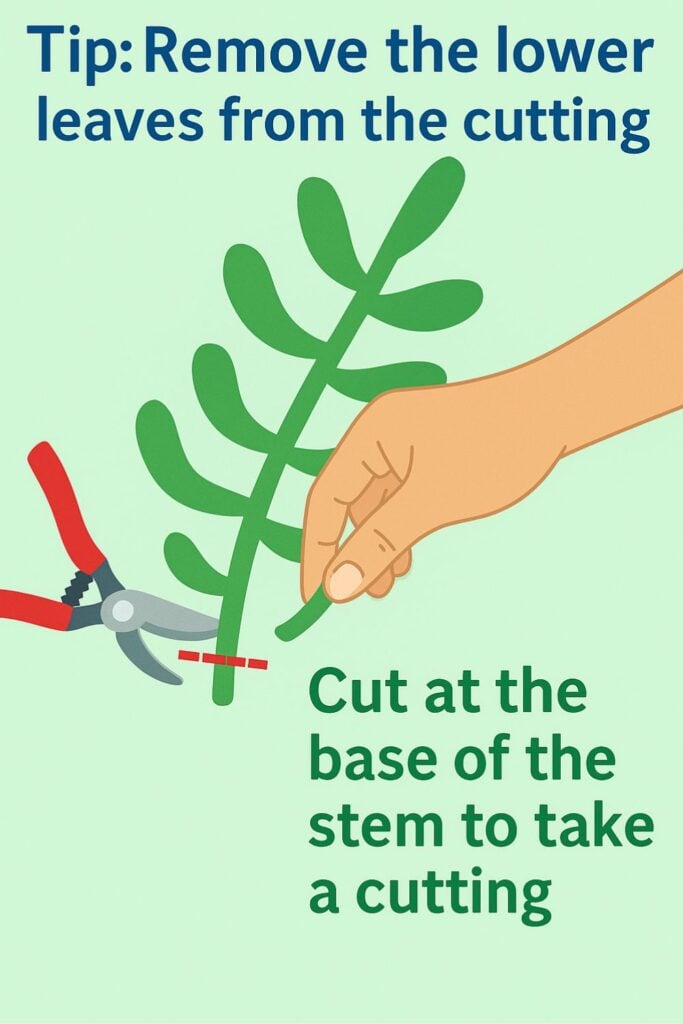
If the leaves are crowding the stem and you can’t fit your scissors, gently pluck off a few leaves or use fishing line (monofilament) wrapped around the stem to slide through.
(Pro tip: Trimming succulents that are too tall in summer? This same method applies—just watch the humidity!)
2. Allow the Cutting to Dry
Place your cutting in bright, indirect light (avoid direct sun) and let the cut end dry for about one week. Proper drying prevents rot and promotes rooting.
Hang the cutting from a jar rim or wire rack so it stands upright—laying it down can make the stem bend, which makes planting tricky.
3. Plant After Roots Appear
After the cut end dries, keep it in bright shade. In 2–4 weeks, you’ll see tiny roots emerging from the cut surface. Once you have a good network of roots, plant your cutting in a pot filled with succulent mix.
Aftercare for Succulent Cuttings
After planting, wait 2–3 days before watering. Don’t rush it—your new baby needs time to adjust. Then, gradually move it from bright shade into stronger light over several days.
Frequently Asked Questions about Succulent Cuttings
How Long Does It Take for Roots to Appear on Succulent Cuttings?
It varies by species and conditions, but generally 2–3 weeks. In less ideal conditions, it can take a few months. The trick is moderate light—aim for brightness where you could read without extra lighting, but avoid direct noon sun.
Will the Cut Mother Plant Grow Again?
Yes! With good care, the remaining stem will sprout new growth from its nodes. Keep it in bright light and don’t drench the cut surface—just water normally.
I Heard You Shouldn’t Dry Succulent Cuttings—Is That True?
Some gardeners skip the dry period to speed things up, but it raises the risk of rot. If you’re a beginner, stick with drying the cut end first.
Which Succulent Types Are Best for Cuttings?
Most succulents root well from stem cuttings. However, types with barely noticeable stems—like Haworthia, Agave, or certain living-stone species—are often better propagated by leaf cuttings or division instead.
Major rosette succulents such as Echeveria, Crassula (Jade plant), and Sedum are ideal for stem cuttings; they root easily and look great afterwards.
Restyle Overgrown Succulents with Cuttings!
Cuttings are an easy way to transform a leggy plant into tidy new starters. As long as you pick the right time and let your cuttings dry, you’ll see a high success rate. Ready to nip those floppy stems and enjoy fresh, compact rosettes? Give it a go!
If a cutting falls off unexpectedly—no worries! New pups can sprout from the leaf’s base and develop their own roots. Don’t toss those dropped leaves; lay them on soil and try leaf propagation, too.


