Hydrangeas are often considered quite finicky. Some varieties struggle with winter hardiness, others require complex pruning, and all can be susceptible to diseases and pest attacks. So, what should you do if your beautiful plant suddenly looks sad and droopy?
You’ve chosen the perfect spot in your garden, bought a healthy seedling, and watered it regularly all season, but something went wrong: the hydrangea’s leaves began to yellow, dry out, or turn black before falling off. What issues can cause the leaves to dry, and what steps can you take to save the plant? Let’s dive into it.
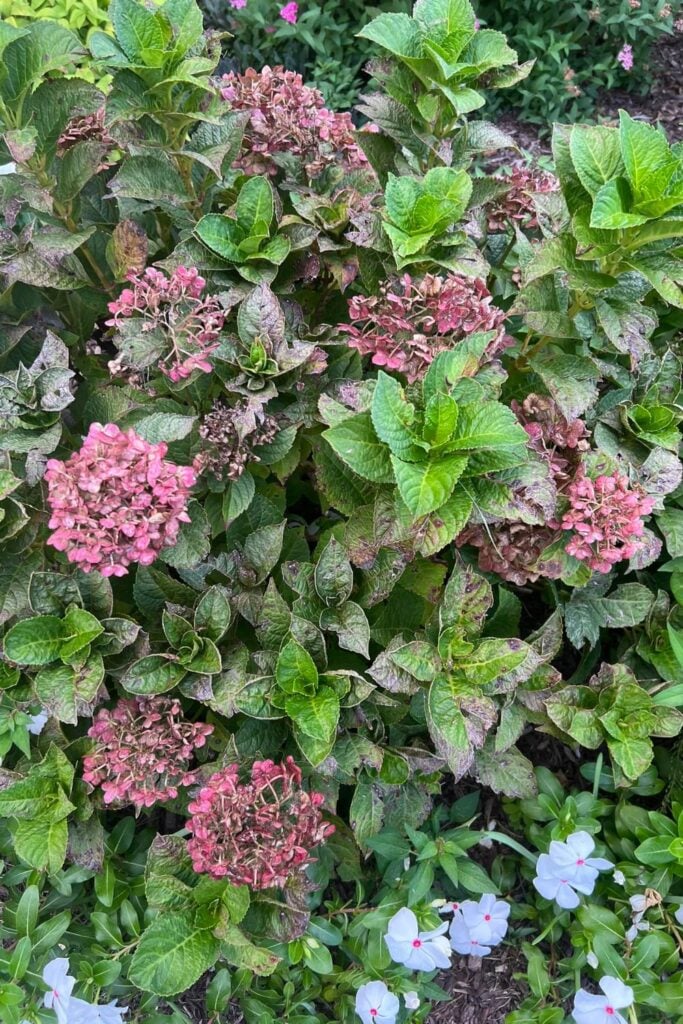
Most reasons leading to leaf desiccation, loss of ornamental value, and wilting hydrangeas boil down to improper site selection and violations of cultivation techniques, especially when combined with unfavorable weather conditions.
Lack of Water
Hydrangeas love moisture, and maintaining constant soil humidity is crucial in their care. Disruptions in their “drinking regimen” can cause the shrub’s leaves to dry out.
The Latin name for hydrangea, Hydrangea, translates to “a vessel of water,” and in Japan, the plant is poetically called “yearning for water.”
Proper watering and additional mulching of the soil around the base will help save a hydrangea if it starts drying out due to insufficient water.
Avoid watering the plant infrequently but heavily—instead, opt for regular, moderate watering: 1–1.5 buckets (approximately 4–6 gallons) of water per mature bush once a week. If the weather is hot, consider doubling the watering frequency.
Overwatering Your Hydrangea
Excessive moisture is just as harmful to hydrangeas as dry soil.
How to tell the difference? With insufficient watering, hydrangea leaves first lose turgor, becoming soft and limp, and then start drying at the bottom of the bush.

In the case of waterlogging—if the hydrangea is growing in heavy clay soil—its roots may begin to rot, causing the foliage to dry and fall off.
To learn more about how to handle overwatered plants, check out How to Save Overwatered Hydrangeas.
To remedy this, transplant the hydrangea to a higher spot and adjust your watering schedule. While transplanting, be sure to remove any rotten roots and avoid overwatering in the future.
Incorrect Site Selection for Your Hydrangea
Hydrangeas thrive best when planted in locations protected from the harsh midday sun. This could be near a gazebo, pergola, or in the shade of taller plants.
In direct summer sunlight, hydrangeas suffer from excessive light—the leaves begin to dry, and the bush may die. The optimal planting spot allows the hydrangea to catch the gentle morning light while being in partial shade during the day.
If your garden lacks such a spot but you still want to plant a hydrangea, consider creating an artificial canopy. Setting up a temporary tent is also recommended for young, newly planted bushes to help them adapt and settle into their new environment. Use a light, semi-transparent material that filters sunlight, like white garden fabric or gauze.
Fungal Diseases in Hydrangeas
A wet summer, improper or insufficient pruning, an abundance of weeds around the base, and insect pests can all lead to hydrangea diseases. Most commonly, we’re dealing with fungal infections, many of which are treatable.
Powdery Mildew on Hydrangeas
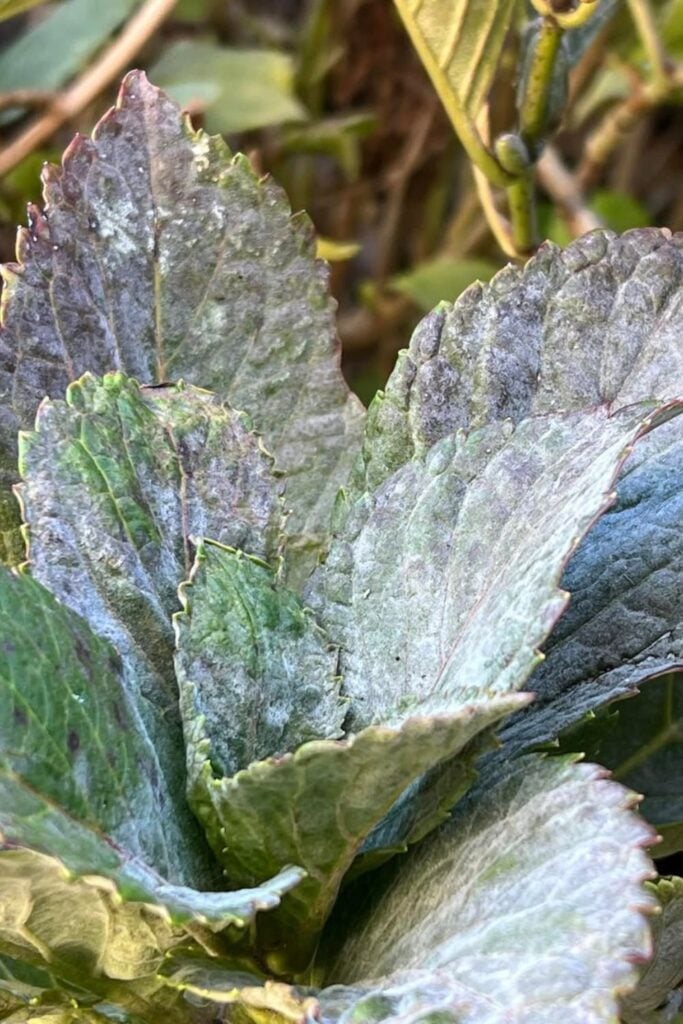
This fungal infection is characterized by white spots on the leaves, as if dusted with flour. After the fungal spores mature, “dew drops” appear on the spots, and then the affected leaves wilt and fall off.
Usually, the lower parts of the plant and young or weak shoots are affected first, with symptoms gradually moving upward. The disease can arise due to overly dense plantings, excessive watering, high temperatures, and sharp fluctuations in air humidity.
Treatment involves pruning all diseased shoots and leaves (which must be burned) and treating the plant with fungicides like Bonide Fung-onil Multi-Purpose Fungicide or Spectracide Immunox Multi-Purpose Fungicide. Remember to rotate fungicides with different active ingredients to prevent the fungus from developing immunity, which would make it harder to combat.
There are also home remedies for fighting powdery mildew. Mix 2 tablespoons of baking soda and 2 teaspoons of liquid soap in 1 gallon of warm water. Spray the solution on the bush 5–6 times at weekly intervals.
Downy Mildew (Peronospora) on Hydrangeas
This disease is similar in manifestation to powdery mildew: yellowish, gray, or brown spots on the leaf surfaces, covered with a whitish bloom underneath.
In dry weather, the spots are barely noticeable, becoming most prominent after rain. As the disease progresses, the leaves dry out, darken, and fall off even with adequate watering.
In the early stages, Neem Oil Extract like HARRIS Neem Oil is effective against downy mildew. In more severe cases, use fungicides such as Daconil Fungicide Concentrate.
White and Gray Mold on Hydrangeas
The fungus affects all parts of the shrub, manifesting as a mossy white or gray coating on the leaves. In dry weather, the damaged areas on the leaves dry out and turn into holes. An affected root system struggles to absorb nutrients from the soil, and the plant begins to die slowly.
To treat hydrangeas affected by white and gray mold, use antifungal preparations like Copper Fungicide. Apply the treatment twice, two weeks apart.
Rust on Hydrangeas
This disease is also a fungal infection. The pathogen overwinters in the soil, plant debris, and roots, with spores spread by rain, wind, and insects, settling on leaves and stems. Signs of the disease include orange or reddish-brown pustules on the leaves, followed by yellowing, curling, and drying of the infected parts.
Early-stage rust can be effectively treated with biofungicides like Garden Safe Fungicide3 Concentrate, which is available on Amazon.com. If the disease is advanced, consider stronger treatments like Bonide Copper Fungicide. Before treatment, be sure to remove and destroy the infected parts of the plant.
In addition to these ailments, hydrangeas are also susceptible to septoria leaf spot and fusarium wilt. Septoria is characterized by brown spots up to 0.25 inches in diameter on the leaves.
Gradually, the leaves yellow, dry out, and fall off. Fusarium wilt is a so-called “unexplained” wilting of the plant, actually caused by a fungus inhabiting the roots. Both infections can be effectively treated with Fungicide3.
As you can see, while the diseases and symptoms vary, the treatment approach is similar.
First, remove the damaged leaves and shoots. The challenge is that fungal infections are highly contagious—spores spread easily through tools and gloves, so prune carefully to avoid damaging healthy parts of the plant. Disinfecting your tools is also a good practice.
Combat all these ailments using fungicides. Use the appropriate preparation for each type of fungus to effectively tackle the disease (see above).
Prepare a fungicide solution as per the instructions and thoroughly spray the bush, making sure to treat the soil underneath as well. To reinforce the effect and for prevention, you can repeat the procedure after 1–2 weeks.
Preventing fungal diseases in hydrangeas involves following cultivation techniques, reducing watering during cool, wet weather, and promptly cleaning plant debris from the area.
At the first signs of disease, conduct sanitary pruning as quickly as possible to prevent the spread of the fungus.
Viral and Physiological Diseases of Hydrangeas
Ring spot and dry black spot can affect hydrangeas when metabolic processes are disrupted and care is inadequate.

Dry black spot is characterized by brown spots on the leaves and gradual wilting, caused by using hard water for irrigation or sunburn. It’s best to water hydrangeas with settled tap water or rainwater—the shrub will reward you with lush greenery and abundant flowering.
Viral diseases affect weakened hydrangea bushes suffering from nutrient deficiencies and unfavorable weather conditions.
These diseases can be transmitted from plant to plant by pests or even gardeners using contaminated tools during pruning. An exception is ring spot, which is passed to young seedlings from the parent plant.
This hereditary disease manifests as small brown spots with blurred edges that “burn through” the leaf tissue, potentially leading to the hydrangea’s death.
Unfortunately, there’s no cure for this ailment, so it’s crucial to be vigilant when purchasing seedlings and choose only healthy specimens.
Low Soil Acidity
A subtle reason for hydrangea leaves drying out might be hidden in improper soil acidity. When the soil becomes alkaline, the shrub’s foliage first lightens and then completely dries out.
If your hydrangea leaves are yellowing and you’re unsure why, you might find this resource helpful: Why Hydrangea Leaves Turn Yellow.
Hydrangeas prefer acidic soil—for optimal health, they need soil with a pH of 4.5–5. If the soil in your garden has higher pH levels, you can add peat moss, pine needles, or sawdust (make sure it’s well-composted) to the planting hole.
Mulching with pine needles and watering with acidified water also help increase acidity—for this, you can use citric or oxalic acid (1 teaspoon per 0.8 gallons of water).
After reading this, you might think, “This hydrangea seems too high-maintenance!” But that’s not the case. Many gardeners grow hydrangeas without ever encountering diseases or pests.
The shrub is quite resilient to various ailments and often overcomes them on its own. By planting this “vessel of water” in your garden, you’re sure to enjoy the sight of its lush, blooming clusters. You’ll be rewarded with admiring glances from guests and perhaps a touch of envy from your neighbors!