Peace lilies are cherished by both beginner and experienced houseplant owners for their gorgeous green foliage and numerous added benefits. Although these plants are famously easy to care for, you might occasionally notice their leaves drooping or wilting.
Fortunately, there’s no need to panic—drooping leaves are often a sign of a problem that can be solved quickly and easily. In this article, we’ll explore the reasons why your Peace Lily (Spathiphyllum) might be wilting and how to fix each issue so you can restore your plant’s vibrant look.
Causes of a Drooping Peace Lily — The Basics
Peace Lilies can droop for several reasons, but the most common culprit is either insufficient watering or overwatering.
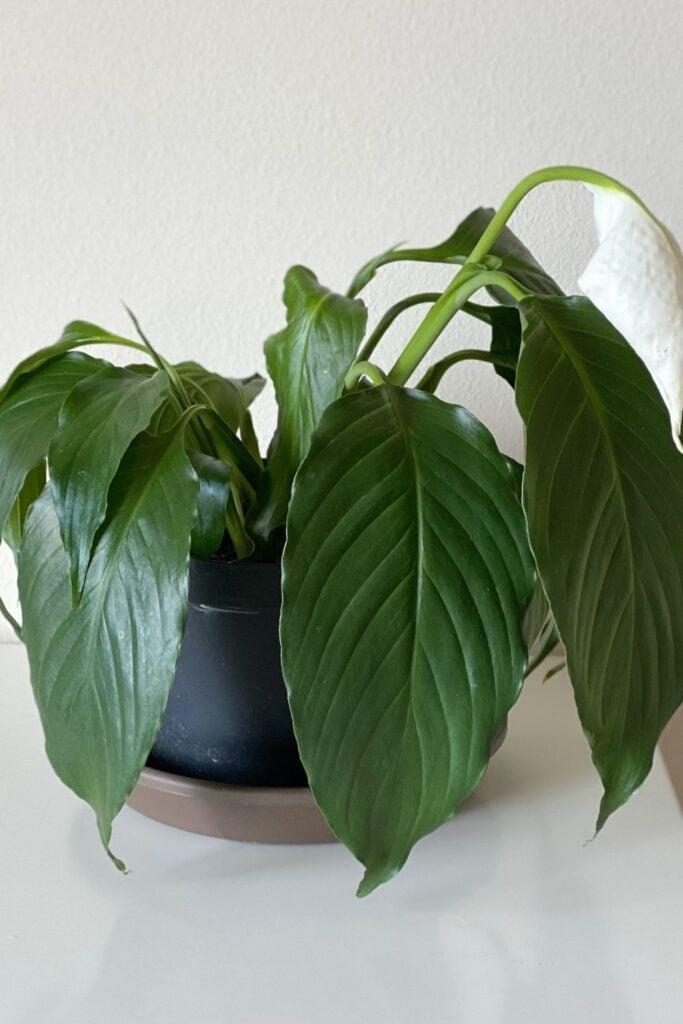
They may also wilt if the temperature or humidity levels are off. Too much direct sunlight, poor soil conditions, and pesky insects can likewise cause drooping leaves.
Common Reasons Your Peace Lily Is Drooping
If your Peace Lily’s leaves are starting to hang down, don’t worry. A bit of detective work can help you figure out the root cause.
Each potential trigger has its own set of symptoms and prevention techniques. Below are the main reasons your Peace Lily might be wilting.
1) Watering
Peace Lilies, also known as Spathiphyllum, originally come from the tropical jungles of South America and Southeast Asia.
In their natural habitat, these glossy beauties are accustomed to damp conditions, which means they prefer consistently moist soil. Peace Lilies don’t tolerate drought well and typically need watering about once a week.
If your plant’s leaves have begun to droop, do a quick soil test by pressing a finger into the pot. If the top inch or two feels dry, underwatering is likely the cause.
Give your Peace Lily a drink, and it should perk up before long. Because Peace Lilies visibly signal when they’re thirsty, they’re a fantastic choice for first-time plant parents who want a more forgiving houseplant.
2) Overwatering
While Peace Lilies thrive in moist soil that mimics their jungle origins, it’s possible to go overboard. Overwatering is another frequent cause of drooping leaves. If your Peace Lily sits in waterlogged soil for too long, it can develop issues like root rot.
Luckily, wilting leaves can be a helpful clue. If your Peace Lily’s leaves droop and the soil still feels wet to the touch, you’ve likely been watering too much or too often. Allow the plant to dry out a bit until the top inch or two of soil is no longer soggy.
If that doesn’t resolve the issue, make sure the pot has proper drainage holes to let excess water escape. Should the soil remain overly wet, consider repotting your Peace Lily into fresh, well-draining mix.
3) Incorrect Temperature or Humidity
As tropical natives, Peace Lilies need warm temperatures and medium to high humidity to flourish. When either factor is out of balance, the plant’s leaves may droop. Peace Lilies are happiest at temperatures between 55 to 85°F, with humidity levels around 60%.
If your indoor environment is too dry or too hot, you could see wilted leaves. Brown leaf tips and dropping foliage are also clear warning signs of an uncomfortable climate. Keep Peace Lilies away from cold or hot drafts to maintain a stable temperature.
For humidity, use a hygrometer to measure the moisture around your plant. Increase humidity by misting the leaves every few days, running a humidifier, or placing the pot on a pebble tray filled with water (ensuring the water doesn’t directly touch the bottom of the pot).
4) Incorrect Lighting Levels
Peace Lilies grow best in indirect sunlight or partial shade. Since these plants originate from jungle environments, they’re used to dappled sunlight and plenty of shade. If a Peace Lily receives too much or too little light, its leaves can begin to droop.
Dry, drooping, or wilted leaves may indicate that your Peace Lily is getting too much bright sunlight. Wilting leaves that start to turn yellow can strongly suggest that your Peace Lily is living in too much shade.
To prevent drooping caused by poor lighting, try placing your Peace Lily in an east- or north-facing room. Position the plant at least a few feet away from the window to reduce the amount of direct light.
5) Unsuitable Soil Conditions
Peace Lilies need a well-draining potting mix that allows good airflow around the roots. At the same time, the soil should retain enough moisture to support healthy growth. If the soil is too dense or drains too quickly, you may notice drooping leaves.
If your Peace Lily’s leaves have wilted or are hanging down, feel the soil. If it’s waterlogged, the soil likely isn’t draining well. Try mixing in materials like sand or perlite to improve drainage.
If the soil is dry and you have drooping leaves, your plant is probably under-watered. That means the soil drains too quickly. Add a bit more houseplant potting mix or compost to help the soil hold extra moisture.
6) Your Plant Needs Repotting
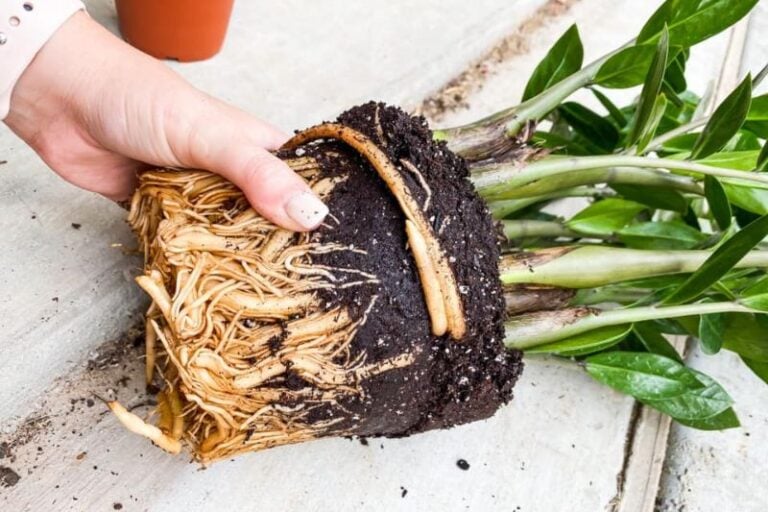
A Peace Lily can also droop if it’s root-bound. Though Peace Lilies are relatively slow growers that typically only need repotting once a year, a crowded plant will often show drooping leaves because it can’t get enough nutrients or water to sustain its growth.
If you see roots poking out of the drainage holes, your Peace Lily definitely needs repotting.Repotting or dividing your Peace Lily is the obvious solution.
You can transplant the entire plant into a larger container or divide it into multiple plants. Use a potting mix similar to the original soil. After your Peace Lily settles into its new pot, the leaves should perk up again.
7) Pests or Diseases
Although Peace Lilies are quite hardy, they can be affected by a few pests or diseases, which may cause drooping leaves. Fungus gnats, mealybugs, and scale (often called scale insects) are common troublemakers for Peace Lilies.
If your Peace Lily’s leaves are drooping, inspect the plant thoroughly. Look for tiny gnats (fungus gnats), clusters of scaly-looking spots (scale insects), and sticky honeydew deposits (mealybugs).
To battle fungus gnats, you can use sticky traps or place a small container of apple cider vinegar (with a drop of dish soap) near the plant.
You can also try Yellow Sticky Traps on Amazon. Make sure your Peace Lily is in well-draining soil to help deter fungus gnats. Use insecticidal soap or Neem Oil on Amazon to eliminate mealybugs and scale. Also, remove any leaves that show signs of honeydew or mold.
8) Root Rot
Root rot is a common result of overwatering and can certainly cause Peace Lily leaves to droop. Avoiding overwatering can be tricky, especially for novice plant owners. If your soil feels constantly wet or the roots smell unpleasant, root rot is likely the culprit.
Tackle root rot by repotting your Peace Lily into fresh, well-draining soil. When removing the plant from the old pot, prune any mushy or foul-smelling portions of the roots. Once it’s time to water again, only give your Peace Lily a drink if the top inch or two (2–5 cm) of soil feels dry to the touch.
How to Fix a Drooping Peace Lily
The best way to revive a wilting Peace Lily is to create ideal growing conditions. That means a warm, humid environment, well-draining soil, and indirect sunlight or partial shade. You should also stick to a consistent watering schedule to avoid issues like under- or overwatering.
Peace Lilies thrive at temperatures between 55 to 85°F. Keep humidity near 60% by misting the plant every two to three days. You can also use a humidifier, place the pot on a pebble tray, or situate your Peace Lily in a steamy, humid bathroom.
A Peace Lily needs a soil mix that drains well yet holds some moisture. Usually, this means combining quality houseplant compost with aerating materials. A good starter mix is two parts standard houseplant compost, two parts sand or bark, and one part perlite.
These tropical plants are used to the shadier jungles of their native habitat, so they cannot withstand intense or direct sunlight. Instead, aim for bright, indirect light or partial shade. An east- or north-facing room is ideal.
While Peace Lilies do love consistently moist soil, they hate being waterlogged. If left in standing water, they become vulnerable to root rot and pest infestations. A helpful rule of thumb is to water your Peace Lily once the top inch or two (2–5 cm) of soil feels dry.
Finally, plan to fertilize your Peace Lily every six to eight weeks during the spring and summer months.
Drooping Peace Lilies – Final Thoughts
Peace Lilies are an ideal pick for new plant parents. And while drooping leaves might look alarming, don’t panic. With a bit of detective work, you can quickly zero in on the cause and fix it. Underwatering, overwatering, and less-than-ideal growing conditions are the most common reasons a Peace Lily’s leaves may sag.
If you’re on the hunt for a new Peace Lily to add to your collection, check out our detailed guide on the best online plant shops that ship Peace Lilies nationwide. By giving your Peace Lily proper care and attention, you’ll be rewarded with a lush, vibrant houseplant that can flourish for years to come!