Believe it or not, there’s a wealth of hydrangea species and varieties you can successfully grow in your garden! Check out our selection if you’re considering planting this stunning shrub in your yard.
Scientists have identified 52 species of hydrangeas, though not all are cultivated. Originating from China, Japan, and other Asian countries, this luxurious ornamental shrub “migrated” to Europe in the late 18th and early 19th centuries and quickly captured hearts.
Hydrangeas thrive in acidic soil and partial shade. While many garden species can freeze in harsh winters, some are hardy enough to withstand even the lowest temperatures.
In this list, we’ve compiled the most popular species and varieties of hydrangeas that you can grow in your own garden.
Smooth Hydrangea
Latin name: Hydrangea arborescens
The smooth hydrangea is a shrub native to North America. In the wild, it can grow up to 10 feet (3 meters), but in the garden, its height rarely exceeds 5–6.5 feet (1.5–2 meters).
This species stands out with its large, lush clusters of white—and occasionally pink—blooms. The flower heads can be 6 inches (15 cm) or more in diameter. Depending on the variety, this hydrangea blooms almost the entire season—from May to October.
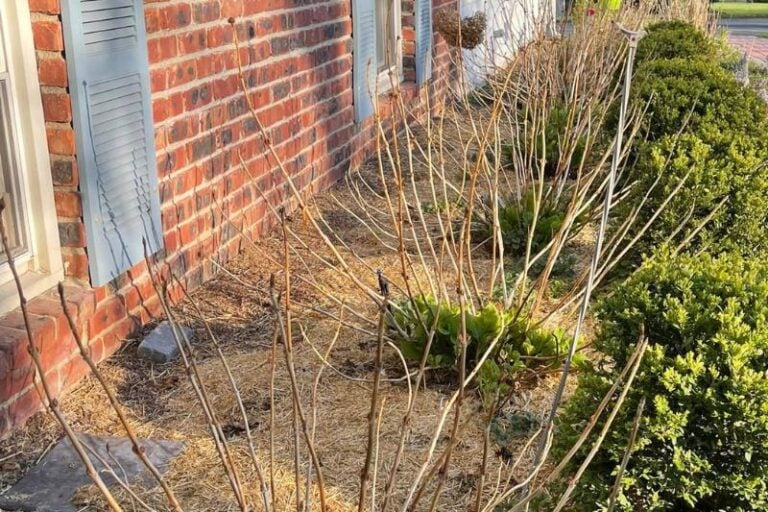
The smooth hydrangea needs annual pruning. Each spring, it’s essential to cut back old, damaged, frostbitten, and overcrowded stems to the base. One-year-old shoots should be shortened to 3–5 pairs of buds. In the fall, remove any damaged and dry branches.
Here’s a tip: the healthy stems you prune in spring can be used for propagation. These cuttings have an almost 100% success rate in rooting!
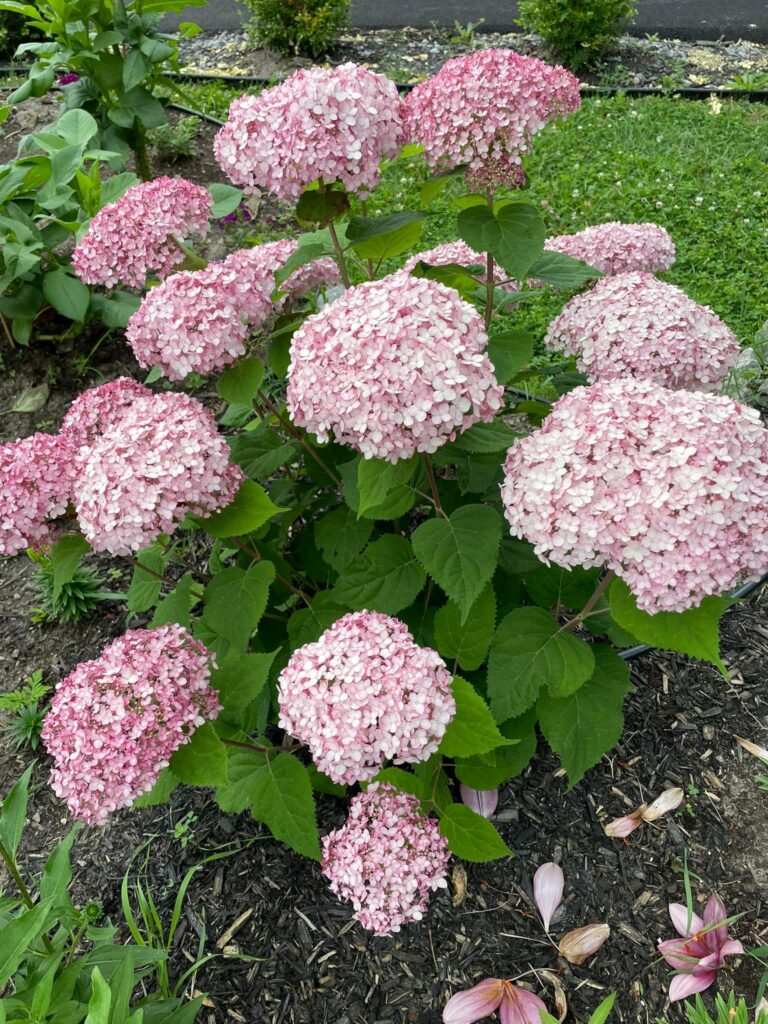
Popular varieties of smooth hydrangea:
- Annabelle – A shrub about 5 feet (1.5 meters) tall with enormous snow-white flower heads over 8 inches (20 cm) in diameter, blooms from May to October.
- Incrediball – A shrub up to 5 feet (1.5 meters) tall with massive white blooms up to 12 inches (30 cm) across, blooms from June to September.
- Invincibelle Spirit – A shrub up to 4 feet (1.2 meters) tall with pink flower heads up to 8 inches (20 cm) in diameter, blooms from June to September.
- Bella Anna – A shrub up to 4 feet (1.2 meters) tall with vibrant pink flower clusters about 8 inches (20 cm) in diameter, blooms from June to September.
You can plant this hydrangea alone or in groups, and it’s also perfect for creating a living hedge.
Oakleaf Hydrangea
Latin name: Hydrangea quercifolia
Take one look at the oakleaf hydrangea, and you’ll instantly see how it earned its name. While its leaves aren’t identical to oak leaves, the resemblance in shape is unmistakable.
It blooms all season long—from early summer right through to fall. One standout feature of the oakleaf hydrangea compared to its “sisters” is that its foliage turns a brilliant crimson in autumn. It’s truly a sight to behold!
This plant typically reaches 6.5–8 feet (2–2.5 meters) in height. The bush is lush and sprawling. The leaves are about 10 inches (25 cm) long, and the flower clusters are usually 6–8 inches (15–20 cm) in diameter.
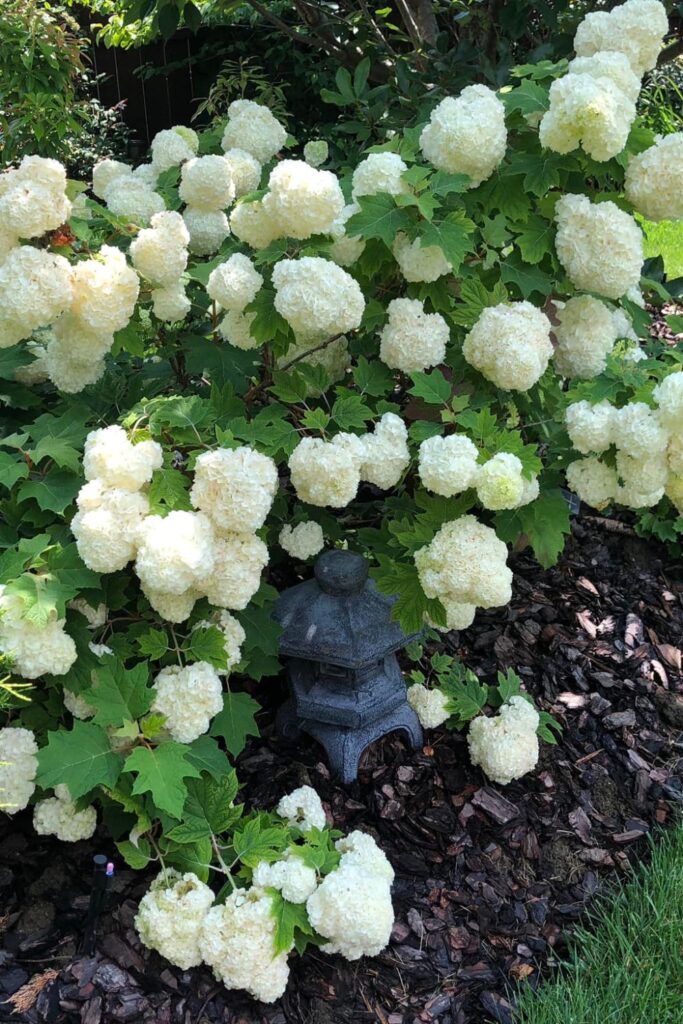
The oakleaf hydrangea boasts impressive cold hardiness, tolerating temperatures down to –20°F (–29°C). However, it’s still a good idea to mulch and protect young plants during the winter.
Popular varieties of oakleaf hydrangea:
- Snowflake – A shrub 5–6.5 feet (1.5–2 meters) tall with large white panicles that turn burgundy-red by the end of flowering, blooms from June to October.
- Snow Queen – A shrub up to 8 feet (2.5 meters) tall with drooping white flower clusters up to 12 inches (30 cm) long that blush pink by the end of the season, blooms from June to September.
- Ruby Slippers – A compact shrub up to 4 feet (1.2 meters) tall with white blooms that age to deep pink, blooms from June to August.
- Alice – A shrub up to 12 feet (3.5 meters) tall with large white panicles that turn pinkish-bronze, blooms from June to August.
Bigleaf Hydrangea
Latin name: Hydrangea macrophylla
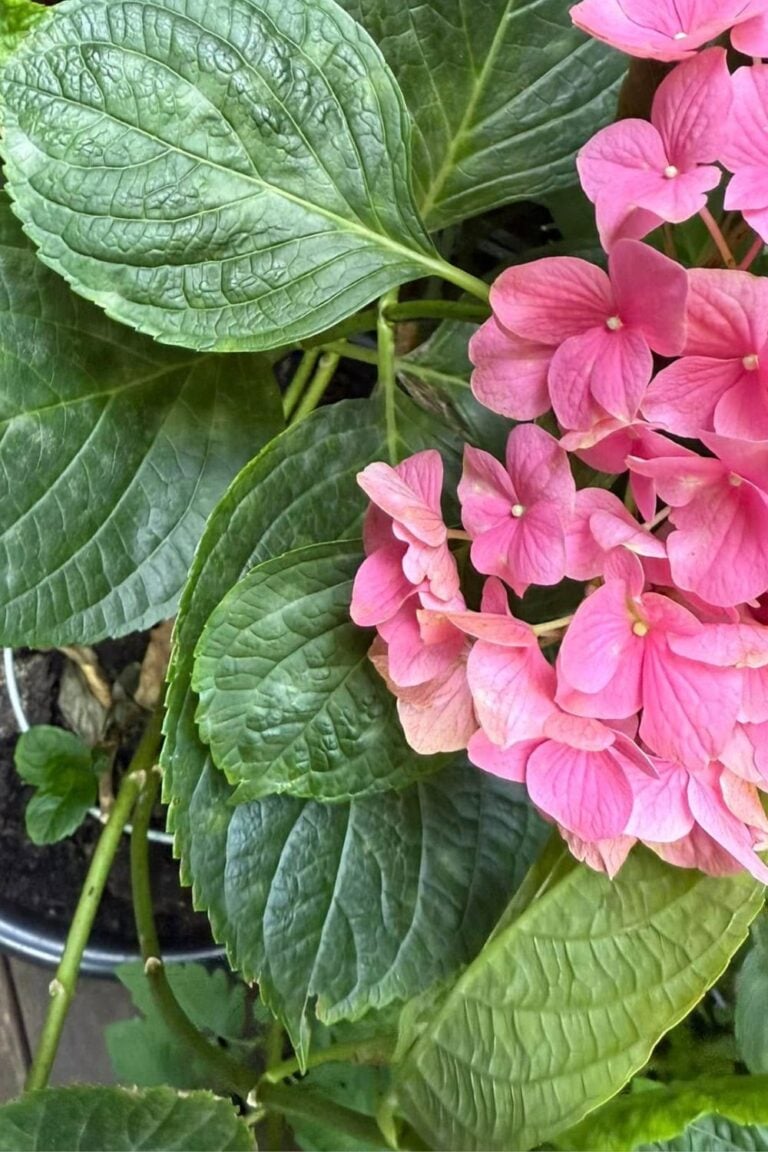
The bigleaf hydrangea is arguably the most iconic of all hydrangeas. It’s a staple in gardens, florists adore its blooms for bouquets and floral arrangements, and it’s often grown in containers in colder climates.
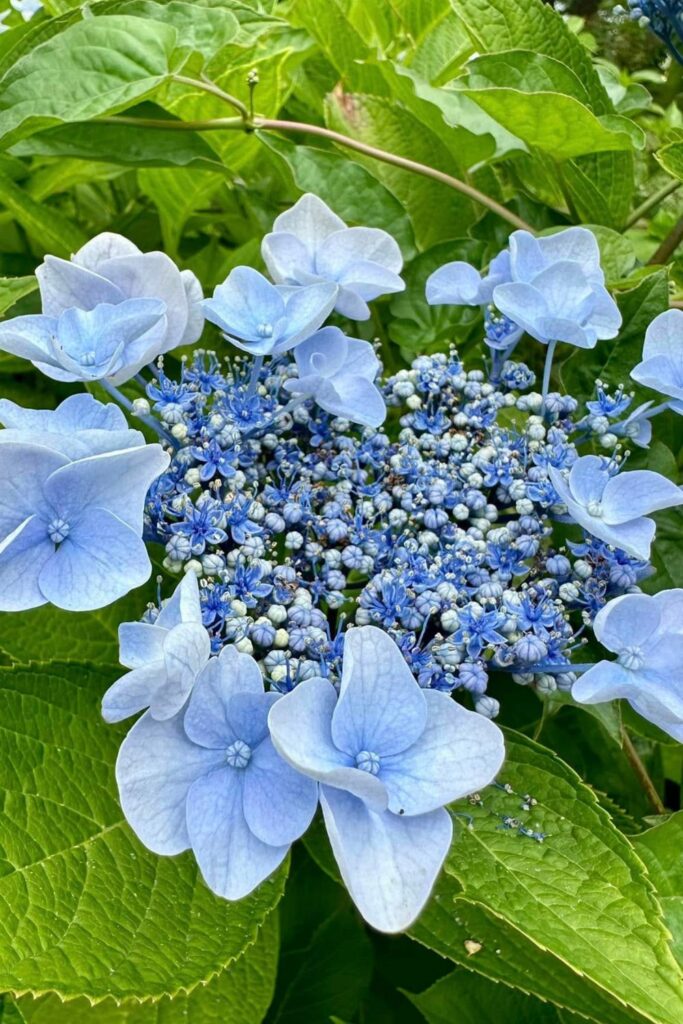
Its main attraction? Large, spherical flower heads in stunning shades.
Popular varieties of bigleaf hydrangea:
- Endless Summer – A shrub 3–5 feet (0.9–1.5 meters) tall with large pink or blue blooms depending on soil pH, blooms from June through August.
- Nikko Blue – A shrub 4–6 feet (1.2–1.8 meters) tall with blue flower heads up to 12 inches (30 cm) in diameter, blooms in June–July.
- Blushing Bride – A shrub about 3–6 feet (0.9–1.8 meters) tall with pure white blooms that age to blush pink or blue, blooms from June to September.
- Let’s Dance Rhapsody Blue – A compact shrub 2–3 feet (0.6–0.9 meters) tall with vibrant blue or pink blooms depending on soil pH, blooms from mid-summer to fall.
Keep in mind that bigleaf hydrangea bushes generally can’t withstand temperatures below 0°F (–18°C). In colder regions, it’s wise to grow them in containers.
Here’s a fun fact: by altering the soil’s acidity, you can change the color of your bigleaf hydrangea blooms to pink or blue!
Panicle Hydrangea
Latin name: Hydrangea paniculata
In the wild, panicle hydrangeas can grow as trees up to 33 feet (10 meters) tall, but in gardens, they usually grow as shrubs up to 6.5–10 feet (2–3 meters).
This hydrangea is quite cold-hardy, tolerating winter temperatures down to –13°F (–25°C). Like all hydrangeas, it loses its ornamental beauty under direct sunlight.
The name says it all—the flower clusters of the panicle hydrangea resemble fluffy panicles or cones.
If you’re training your panicle hydrangea into a tree form, prune the main stem annually to a strong bud and remove side shoots at the base. Start forming the crown at about 3–5 feet (1–1.5 meters) high. If you’re growing it as a bush, prune all shoots back to three buds in the spring.
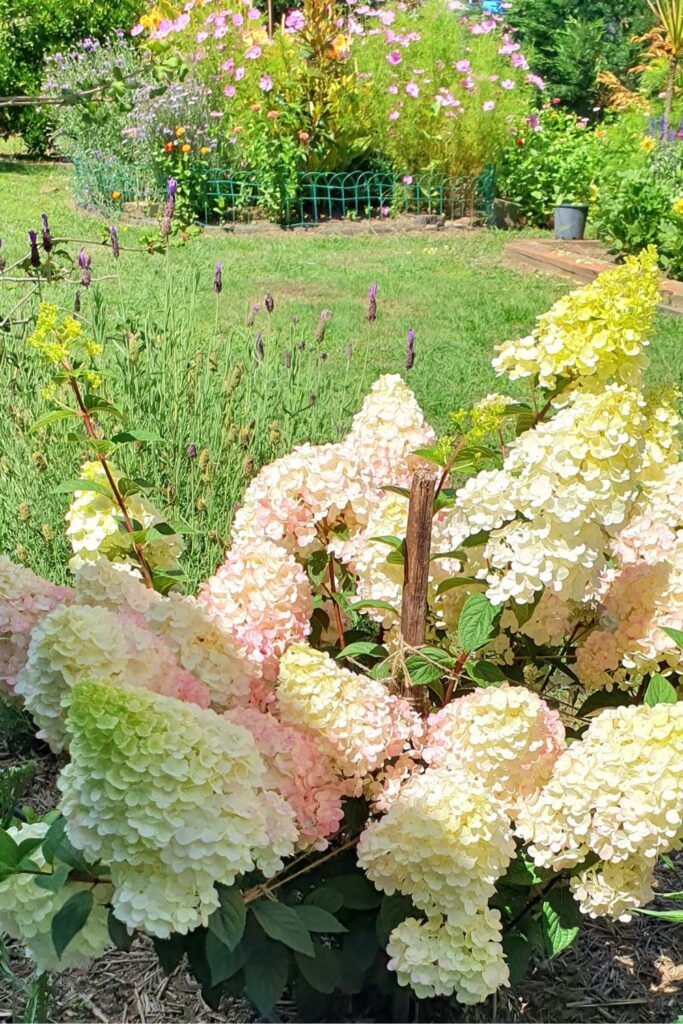
Good news: panicle hydrangeas are easy to propagate from cuttings, with an 80–100% success rate. Take cuttings in June or July.
Popular varieties of panicle hydrangea:
- Bobo – A compact shrub up to 2.5 feet (0.7 meters) tall; its blooms change from yellowish-white to soft pink, flowering from July to September.
- Grandiflora – A tree or shrub up to 8–10 feet (2.5–3 meters) tall; large flower clusters change from creamy white to pink and finally to green-red by the end of blooming, flowering from June to October.
- Kyushu – A shrub up to 10 feet (3 meters) tall with large, fragrant white blooms, flowering from June to September.
- Limelight – A shrub about 6.5 feet (2 meters) tall; large lime-green blooms on sturdy stems turn pink as they age, flowering from July to September.
- Pinky Winky – A shrub up to 6.5 feet (2 meters) tall; large flower clusters change from white to bright pink, flowering from June to September.
Mountain Hydrangea
Latin name: Hydrangea serrata
The mountain hydrangea is another less common species. Native to Japan and Korea, it’s also known as the “tea of heaven.”
It looks a lot like the bigleaf hydrangea but is a more compact shrub, reaching up to 3.3–4 feet (1–1.2 meters) tall. Plus, you can plant it in sunny spots—as long as you water it regularly (the soil around hydrangeas should always stay moist).
And that’s not its only perk. It can handle frosts down to –13°F (–25°C)! Plus, it blooms all summer long right into early fall.
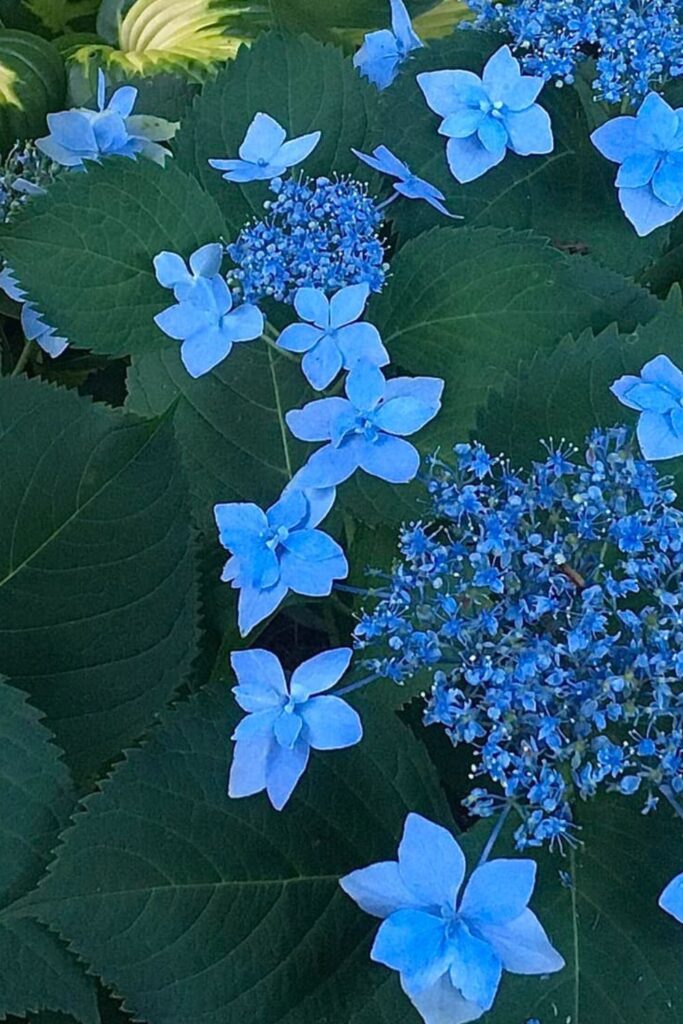
In the fall, prune the stems back to two buds and remove any thin, small growth. In spring, you can propagate mountain hydrangeas from cuttings—by fall, you’ll have little shrubs ready to overwinter under protection.
Varieties of mountain hydrangea worth considering:
- Bluebird – A shrub up to 5 feet (1.5 meters) tall; flowers start pink and turn blue as they mature, blooming from July to October.
- Tuff Stuff – A compact shrub about 2–3 feet (0.6–0.9 meters) tall with pink or blue lacecap flowers depending on soil pH, blooms from early summer to fall.
- Preziosa – A shrub up to 5 feet (1.5 meters) tall; large flower clusters up to 12 inches (30 cm) long change color from white to pink, blooms from July to September.
- Tiny Tuff Stuff – A dwarf shrub up to 2 feet (0.6 meters) tall with double lacecap flowers that can be pink or blue, blooms from early summer to fall.
Climbing Hydrangea
Latin name: Hydrangea anomala subsp. petiolaris
The climbing hydrangea is the only vine among garden hydrangeas. It’s fairly low-maintenance and no harder to grow than Boston ivy.
Its vines can reach 30–50 feet (9–15 meters) long, and the bush spreads about 6.5 feet (2 meters) wide. You can easily train it to cover any structure in your garden.
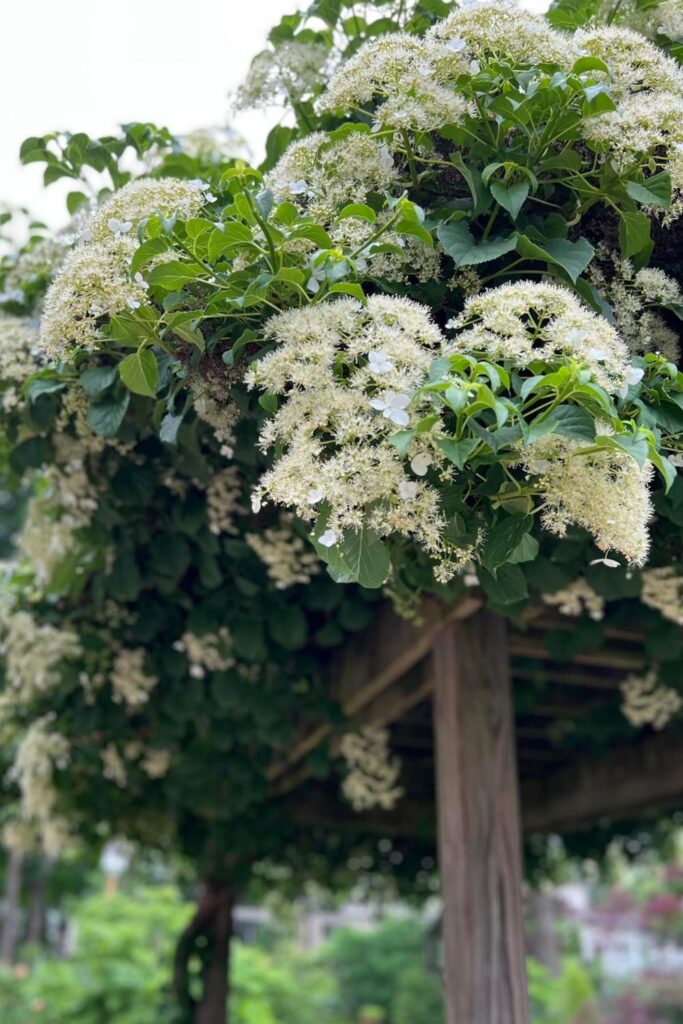
Climbing hydrangea is cold-hardy and shade-tolerant, blooming from mid-June to mid-August. During its bloom, it’s covered with white, lacy flower clusters about 8 inches (20 cm) across, and in fall, its leaves turn a lovely yellow.
Popular varieties of climbing hydrangea:
- Firefly – A vine up to 50 feet (15 meters) long with white blooms and variegated leaves edged in creamy yellow, blooms from June to August.
- Miranda – A vine reaching 50 feet (15 meters) long with white flowers and leaves featuring yellow margins and serrated edges, blooms from June to August.
Sargent’s Hydrangea
Latin name: Hydrangea aspera subsp. sargentiana
You can’t mistake this hydrangea for any other. Its leaves are huge and hairy—actually quite rough to the touch!
The shrub can reach 5–8 feet (1.5–2.5 meters) tall, but in gardens, it usually stays under 3.3 feet (1 meter). The stems die back in winter, like herbaceous peonies, and regrow each year.
Its flower clusters are large, about 8–10 inches (20–25 cm) across, forming flat heads. The fertile flowers in the center are lilac, surrounded by larger sterile white flowers.
It blooms from July to September. You can propagate it from cuttings in early summer.
Sargent’s hydrangea is fairly cold-hardy, but in areas with harsh or unpredictable winters, it’s wise to provide some winter protection.
Bretschneider’s Hydrangea
Latin name: Hydrangea bretschneideri
Let’s wrap up with another unique species—Bretschneider’s hydrangea. Some gardeners mistakenly think it’s a groundcover, but it actually grows up to 10–13 feet (3–4 meters) tall. In the first few years, you might not see much growth, but then it takes off, adding 1.6–2.3 feet (0.5–0.7 meters) each year!
Bretschneider’s hydrangea is incredibly winter-hardy, unlike many other garden hydrangeas. Plus, it’s also great at handling drought conditions.
It blooms from June to August, when it’s covered in fluffy, rounded flower clusters. Fun fact: each cluster has over 400 flowers! The stems are hairy.
You can use the dried flower clusters in winter bouquets—they make beautiful dried arrangements.
You can grow this hydrangea from seeds, sowing them in May in a greenhouse. Seedlings appear about a month later in June, but keep in mind they won’t bloom for 5–6 years.
It’s easier to propagate Bretschneider’s hydrangea with green cuttings in June or July. Depending on the variety, you can expect a 38% to 70% success rate in rooting.
This shrub is often planted as a standalone specimen or next to mock oranges and lilacs, taking over the “baton” of blooming from them. This way, you can create a mixed border of ornamental shrubs that flower from May right through the end of summer.
There aren’t many varieties of Bretschneider’s hydrangea bred. Here are the two most popular:
- Purple Queen – A shrub up to 10 feet (3 meters) tall; inflorescences are initially green, then whiten after opening, and later turn lilac.
- Bougie – A shrub up to 13 feet (4 meters) tall with white flowers.
Whether you’re a seasoned gardener or just starting out, there’s a hydrangea out there that’s perfect for your garden. Don’t miss the chance to add one of these spectacular shrubs to your landscape this season!