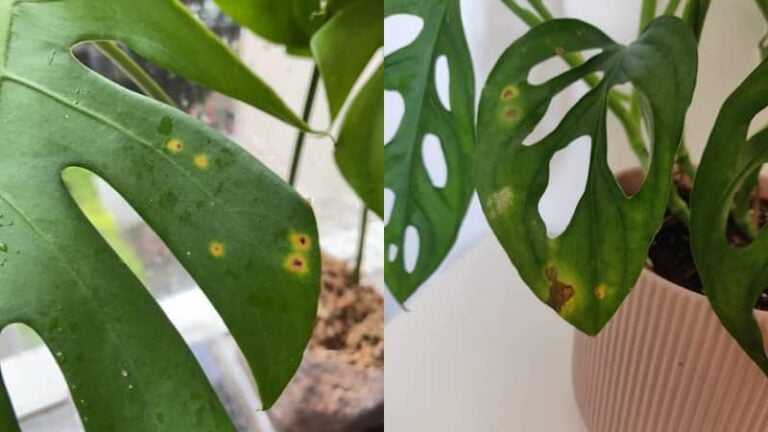
Have you noticed that your favorite plants are wilting and dropping leaves for no apparent reason? Or that their buds are drying out before they even bloom? The culprits could be microscopic insects known as thrips, which settle on your “green companions” and feed on their cellular sap.
Thrips (Thysanoptera) are polyphagous, meaning they can eat almost any type of plant. So whether you have a vegetable garden, a flower bed, or even just a tiny home greenhouse, it’s urgent to save them from these pests.
Besides, thrips carry dangerous viral infections such as the tomato ring spot virus and the curly top virus. The sites where they puncture the plant become entry points for pathogens and fungi.
What Are Thrips?
Thrips are some of the oldest insects, dating back to the Triassic period. Today, scientists have described more than 6,000 species, of which 153 are fossil species. The majority of modern thrips are considered harmful.
They mostly feed on a plant’s cellular sap, but there are also predatory thrips. For instance, insects from the genus Aeolothrips eat the eggs and larvae of plant-eating thrips, while those from Scolothrips prey on spider mites.
These insects go through five life stages: egg, larva, pronymph, nymph, and adult. Adult thrips usually have a brown, black, or gray body and range from 0.02 to 0.12 inches (0.5 to 3 mm) in length. Some species are larger, reaching up to 0.55 inches (1.4 cm).
Their bodies are elongated, and they have two pairs of wings fringed with long, thin hairs, which is why they’re often called “fringed-wing” insects.

Larvae are different from adults in color—usually yellowish-white or pale gray—and they lack wings. In summer, the entire life cycle from egg to adult can wrap up in about five weeks, and adult thrips can live for roughly a month. In favorable conditions, they reproduce year-round.
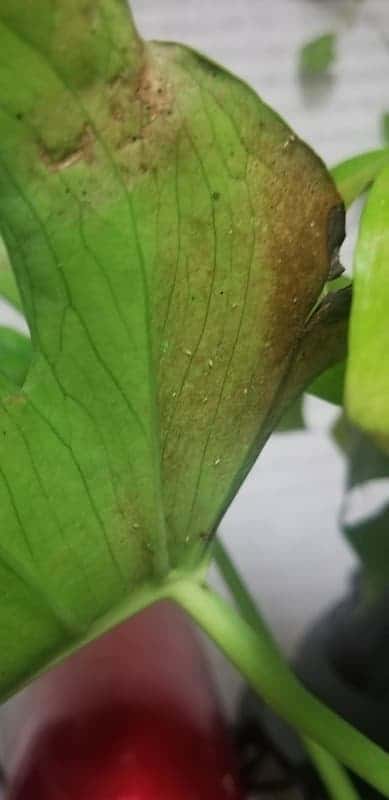
One female thrips can lay up to 70 eggs right on a leaf blade or inside the plant’s tissues, puncturing it first with her piercing-sucking, asymmetric mouthpart. Both larvae and adults also feed through these punctures, creating tiny empty spaces inside the leaves that give them a shiny, silvery appearance.
Thrips can “switch” from one crop to another, which is part of why they can be so challenging to identify—especially considering their miniature size. Among the most damaging species are Western flower thrips (sometimes referred to as American thrips), black thrips, rose thrips, tobacco thrips, and dracaena thrips. They’ve adapted to many chemical pesticides, especially those living on flowers.
Thrips typically live in colonies. Certain species even show social behavior, like guarding their laid eggs and larvae or leaving scented trails to coordinate group feeding.
How to Spot Thrips
An initial colony of thrips on a houseplant or vegetable plant can remain unnoticed for a long time because they lead a fairly hidden lifestyle, often starting on just one plant.

Be on the lookout if you notice that pollen is spilling from flowers without wind or pollinators shaking them. Also, keep an eye out for small whitish or silvery spots on the leaves.
If you want to confirm whether you have these pests, pick a flower and shake it over a sheet of white paper. Another trick is to lure them with a slice of fresh cucumber or apple placed on the soil near the stem—thrips will gather on this treat.
With a severe infestation, all you need to do is check the underside of the leaves—thrips often congregate there.
How to Get Rid of Thrips
Thrips are formidable opponents, and it can be tough to defeat them—especially in large greenhouse setups. They reproduce rapidly (their population can double in about a week) and quickly develop immunity to pesticides.

At the earliest signs of infestation, give your plants a warm shower and keep them in quarantine. Hang up some sticky traps. If the infestation is more serious, you have several options for treating your plants.
Fumigation With Smoke Bombs
In greenhouses or larger indoor growing areas, thrips-infested plants can be fumigated with tobacco-based smoke bombs. The nicotine-containing smoke will kill both larvae and adults, and it won’t harm the plants—some growers even say it helps them grow. Repeat this treatment in about a week, since fumigation does not affect the eggs.
You can only fumigate greenhouses with sulfur-based smoke bombs after you’ve harvested your crops.
Using Insecticides
For houseplants, use systemic insecticides in several treatments. I recommend trying Monterey Garden Insect Spray (Spinosad) on Amazon, which is known to be relatively safe for indoor use. Prepare the solution according to the product directions, spray your plant thoroughly, and you can also water it into the soil if the instructions suggest. Afterward, place a plastic bag over your plant for about 24 hours, then remove it.
In greenhouses, raised beds, or outdoor gardens, you can use insecticides that are widely available in the U.S. such as Bonide, BioAdvanced, Ortho, or Captain Jack’s Dead Bug Brew (Spinosad). Mix and apply according to the manufacturer’s instructions, spraying both the plants and the soil around them. Reapply in about a week.
When choosing an insecticide, pay attention to its active ingredient and rotate different active components because thrips quickly develop resistance if the same product is used repeatedly.
Home Remedies
Home remedies can help when thrips haven’t heavily infested your plants. Common solutions include homemade decoctions of creeping knotweed (sometimes referred to as a mild substitute for the more potent commercial products), yarrow, real (non-ornamental) tobacco leaves, and greater celandine.
You can also spray plants with an infusion of garlic and dandelions. Soak about 2.2 lbs (1 kg) of dandelions in 2.6 gallons (10 L) of water for two days, then add 4–5 crushed heads of garlic. Let the liquid sit for a few more hours before straining and spraying it on the plant.
Biological Methods
In addition to chemical controls, you can use biological methods to combat thrips. Predatory mites known as amblyseius mites (Amblyseius cucumeris, Amblyseius barken, Amblyseius degenerans) have proven effective. They’re released onto the plants, where they immediately start seeking out thrips larvae. One mite can eat two or three larvae a day.
Another predator that preys on thrips are the predatory bugs Orius laevigatus and Orius majusculus.
Prevention: The Best Defense
The most effective way to protect your plants from thrips is prevention. Regularly check your “green companions” and take action promptly.
Keep in mind that overwatering and extremely dry indoor air can boost thrips’ reproduction. Provide your plants with proper care and maintain balanced humidity levels, and thrips will be far less of a threat.
Remember, these tiny insects may seem unnoticeable at first, but they can wreak havoc if left unchecked. By staying vigilant and using the right methods—whether that’s a warm shower for early cases or a combination of insecticides, traps, and biological controls for more serious infestations—you can win the battle and keep your beloved plants safe and thriving.