For seedlings to grow well, not stretch out, not overgrow, and be ready for transplanting into the ground at just the right time, you need to sow seeds at the optimal moment—sounds obvious, right?
But how do you figure that out for different crops? What factors affect the sowing date, and does it vary between berries, flowers, and veggies—or can you plant all your seeds for the new season in a single day?
By sowing seeds at the wrong time, you risk losing most of your vegetable seedlings after transplanting them into the garden—yikes!
Actually, calculating the optimal timeframe isn’t rocket science; you just need to know each crop’s growth quirks and do a little math. Lucky for you, I’ll show you how.
How to Calculate the Sowing Time for Seedlings
To figure out exactly when to sow seeds of a particular crop for seedlings, you need to consider:
- The type of crop and how it grows
- The date you plan to transplant seedlings to their permanent spot
- The number of days until germination
- The age of seedlings you want at transplanting
- Your desired harvest date
When pinpointing your target transplant date, think about where your seedlings will “move” from the windowsill. If they’re headed for a greenhouse, they should be ready by May 10–20 (May 10–20); if you’re planting outdoors, no earlier than June 1 (June 1). And remember, germination can take anywhere from 2 to 10 days, depending on the crop—patience is key!
Let’s Base Ourselves on the Vegetable Seed Sowing Schedule Table:
| Crop | Germination Time (days) | Seedling Age (days) | Transplant Dates to Permanent Site (for Temperate Regions) |
| Cucumber | 2 – 4 | 20 – 25 (for outdoors); 30 – 35 (for greenhouse) | After May 20 — into a greenhouse; after June 5 — into ground |
| Tomato | 5 – 8 | 50 – 60 (for protected ground); 60 – 70 (for outdoors) | After May 15 — into a greenhouse; after June 5 — into ground |
| Pepper | 7 – 10 | 50 – 60 | After May 20 — into a greenhouse |
| Eggplant | 7 – 10 | 50 – 70 | After May 20 — into a greenhouse |
| Early Cabbage | 3 – 4 | 45 – 55 | After May 1 — into ground (under row cover) |
| Mid-Season Cabbage | 3 – 4 | 35 – 45 | After June 1 — into ground |
| Late Cabbage | 3 – 4 | 35 – 50 | After May 15 — into ground |
And Here’s the Flower Seed Sowing Schedule Table:
| Crop | Germination Time (days) | Seedling Age (days) | Transplant Dates to Permanent Site (for Temperate Regions) |
| Lobelia | 10 – 15 | 80 – 90 | End of May |
| Shabo Carnation | 7 – 10 | 90 – 110 | Beginning of May |
| Dahlia | 6 – 10 | 70 | Beginning of June |
| Sweet Pea | 10 – 14 | 30 | Beginning of May |
| Zinnia | 5 – 10 | 60 | Beginning of June |
| Nasturtium | 15 – 20 | 45 | End of May |
To figure out exactly when to sow seeds, look at the transplant date for your chosen plant in the table, subtract the number of days needed to grow seedlings, and then subtract the days required for germination—easy math, big payoff!
For example, for flowering plants that you start in January, pick those annuals and perennials whose period from germination to blooming is more than 130 days. Only such an early start will let you enjoy a full bloom in the same planting season—imagine that flashy flower show!
Or let’s talk tomatoes. We transplant 50–60‑day‑old seedlings outdoors after June 5. So you subtract 60 days for growing the seedlings and another 7 days for germination—which lands your sowing date in late March. Simple, right?
To Get a Harvest by a Specific Date
If you want your first veggies hitting the table by a particular date, use a slightly different calculation based on a plant’s total growing period (usually listed on the seed packet).
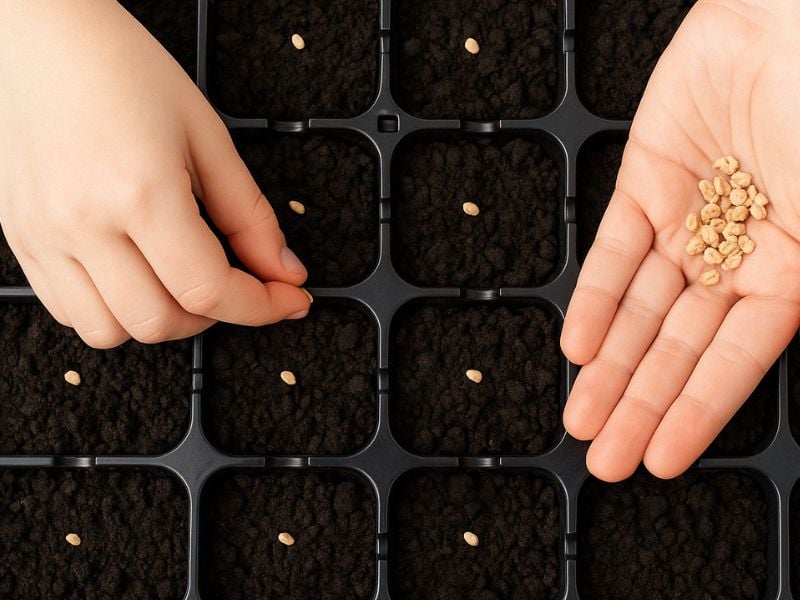
For instance, let’s say you bought tomato seeds with a 130‑day maturation period (from germination to first ripe fruit) and you want that first harvest on July 20.
You’d sow your seeds 142 days before that date (130 days plus 7 days for germination and 5 days for transplant shock). That puts your sowing in the last days of February—mark your calendar!
Consider Your Capabilities
When planning sowing dates, be honest about what you can handle. It’s no secret: the earlier you sow, the earlier you harvest. But don’t chase the calendar blindly.
If you sow pepper seeds in late January or early February, be ready to supplement with grow lights—winter daylight just isn’t enough for healthy pepper plants. Otherwise, your seedlings will be spindly and sad-looking.
Also, remember that you need to transplant them within about 60 days of germination, or they’ll overgrow and struggle to settle in.
That should happen roughly in the first ten days of April. And if you live in a temperate zone without a heated greenhouse, that could be a real challenge.
Seed starting is a lot of work and detail—there are no small things here. So don’t be lazy: brush up on those middle school math lessons and plan your sowing dates for the most fruitful harvest. Good luck, and happy gardening!