Amaryllis was introduced to other parts of the world from South Africa. It belongs to the Amaryllis family and consists of only two species. Indoors, we typically grow hybrid forms and cultivars of Amaryllis belladonna (often called the Belladonna lily in the U.S.).
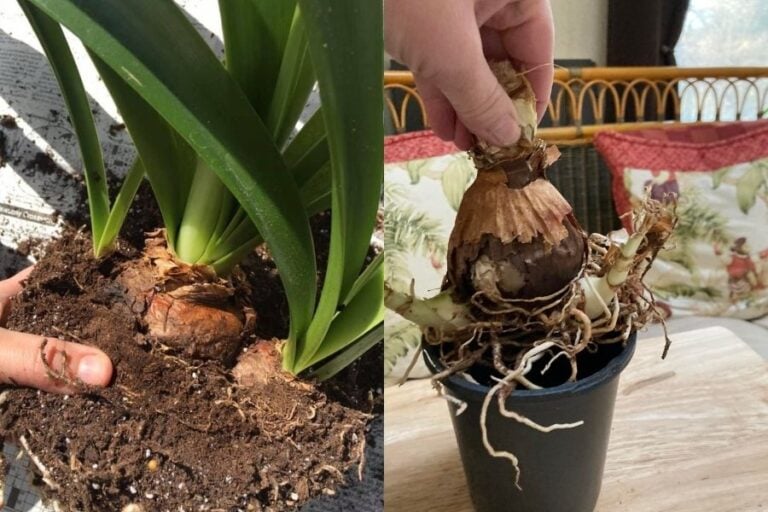
The bulb can reach about 5 in (12 cm) in diameter. Above its sword-like or elongated, pointed leaves rises a bare flower stalk crowned with funnel-shaped blossoms, usually 4 to 8 in number.
In the wild, the lance-shaped petals are white or pink. Cultivated varieties boast a wide color range—from classic bright red to white, greenish, golden, and even purple.
How Often Does It Bloom?
Amaryllis has a distinct full dormancy period, after which it blooms. Considering its origin, it makes sense that in the U.S. it typically blooms in early spring (around March–April).
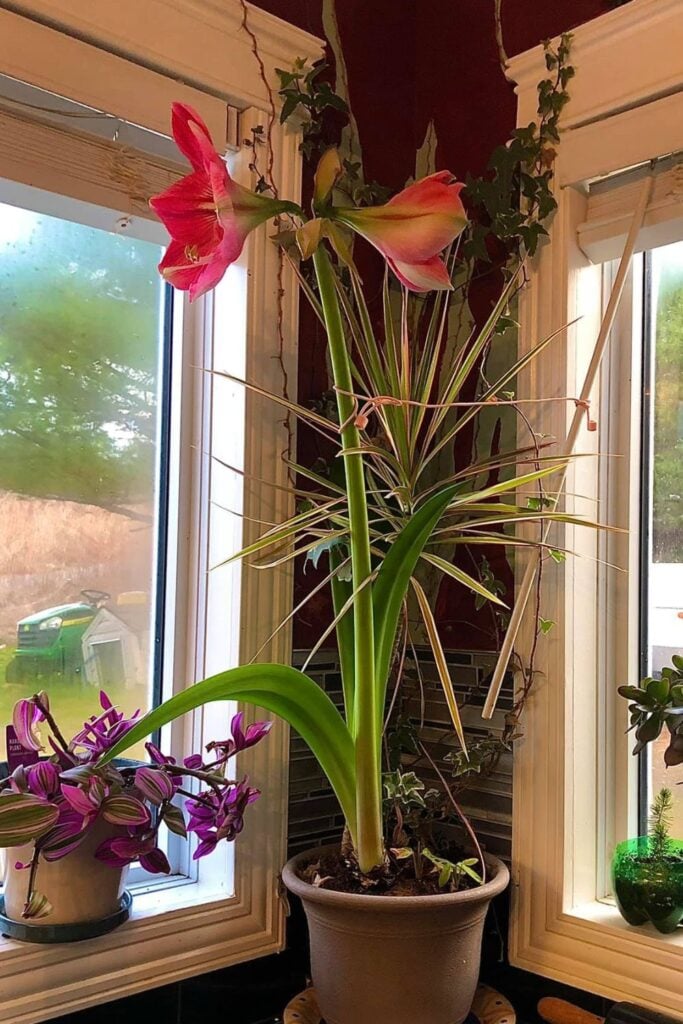
In its native home, that time would be late summer or early fall, but here in the Northern Hemisphere, that translates to our early spring bloom period. Meanwhile, during our late spring and summer, the amaryllis rests as though it’s experiencing winter.
Bloom timing depends on the variety. Some bloom in late winter or early spring; others bloom in summer or fall.
With the right forcing techniques, you can prompt flowering at almost any time you choose. Still, sticking to a natural schedule is healthier.
The bulbs become stronger, the plant stays healthier, and flowering remains abundant each year. With proper care, the plant may even bloom twice in the same year.
Conditions for Amaryllis Blooming
Sometimes, no matter how much we try, an amaryllis won’t bloom. To understand why, let’s review all the conditions it needs. Experienced growers know success comes from recreating an environment close to its native habitat.
Temperature and Dormancy Needs
In South Africa’s Cape Province, where amaryllis originates, summers are hot, and winters are fairly cool.
During active growth, the plant thrives at about 18–25°C (64–77°F). Keep day and night temperatures similar. During dormancy, lower the temperature.
Important! The minimum dormant temperature is about 50°F (10°C).
Watering and Humidity Tips
If humidity exceeds 80%, fungal diseases (like red blotch) can appear. The plant doesn’t need extra humidity. Only during extreme heat might it need a light misting, and then only in the early morning or late evening.
Lighting Requirements
During active growth, give it about 16 hours of light. Use supplemental light if needed. Bright but diffused light is best.
It tolerates direct sun only in the early morning (before 11 a.m.) and late afternoon (after 3 p.m.). In dormancy, it doesn’t need light.
Best Placement
Choose a spot that meets its light requirements, ideally a southwest or southeast window. On a south-facing window, provide midday shade.
Important! To prevent the flower stalk from bending, rotate the pot three times a week.
Common Reasons for No Blooms
Two main issues often cause a lack of flowering:
- Not understanding the plant’s life cycle.
- Mistakes in care.
Let’s break down the details and correct these errors.
Not Respecting the Dormancy Period
Amaryllis differs from many houseplants by requiring a full dormant period. During rest, all processes in the bulb slow down. Nutrients from dying leaves move into the bulb.

To prepare it for dormancy:
- Reduce light exposure, then move it to a dark spot.
- Gradually lower the temperature.
- Reduce watering.
- Stop fertilizing.
After a complete rest (from fall through early spring in the U.S.), it will reward you with abundant, long-lasting blooms. Without this break, the bulb weakens and produces only leaves.
Wrong Pot Size
Beginners might not guess that pot size affects flowering. A spacious pot encourages the plant to produce offspring bulbs rather than flowers. In nature, flowering sets seeds, but in a large pot, it focuses on vegetative growth.
The rule: The pot’s diameter should exceed the bulb’s diameter by about 1.5 in (4 cm). Smaller is okay, larger is not.
Tip! Choose a stable pot so it won’t tip over under the heavy flower stalk.
Incorrect Watering Frequency
This often causes a lack of blooms. During dormancy, the plant needs minimal moisture—just a light misting. After placing it on a windowsill for active growth, continue gentle watering. When the flower stalk reaches about 4 in (10 cm), start regular watering. Let the topsoil layer dry slightly before each watering.
After cutting the spent stalk, don’t stop watering. The plant needs to grow leaves to nourish the bulb. When leaves begin to dry, reduce watering. Always water around the pot’s edges, avoiding direct water on the bulb.
Poor Soil Selection
A lack of nutrients or overly dense soil that hinders air and water flow will impact blooming. The potting mix should include about 1 part composted manure, 3 parts leafy soil, and 2 parts perlite (or coarse sand). Keep the pH around 6.0–6.5. If you’re unsure, buy a prepared amaryllis potting mix.
Important! Sterilize homemade soil mixes.
Inadequate Placement
Low light can delay flowering indefinitely. Harsh midday rays cause stress. Drafts and temperature swings also discourage blooming. Consider these factors when placing your plant.
Bulb Problems
Remember, even a healthy bulb takes about three years to flower. Diseases can prevent normal development. No blooms may occur if:
- There are too many baby bulbs—separate them from the mother bulb.
- Poor care shrank the bulb—ensuring a proper dormant period.
- The bulb froze if temperature guidelines weren’t followed.
- The bulb was stored incorrectly during dormancy.
- It was planted too deep.
Check bulbs carefully before buying. As a preventive measure, soak them in a fungicide solution for about 30 minutes.
Nutrient Deficiencies
Without proper nourishment, no flowers will appear. The plant must regain strength, so feed it every ten days while it’s actively growing. Use fertilizers designed for bulb plants, following package instructions.
Getting Your Amaryllis to Bloom
Carefully analyze your routine, find mistakes, and fix them. You may need to inspect the roots and bulb. Check for diseases or pests and destroy them if found.

Care During Blooming
Amaryllis blooms can last up to about 20 days. During this time, water regularly and drain excess water. Don’t mist the flowers—it may cause spots.
Experienced growers suggest cutting the first stalk after one flower opens. It will last long in a vase, and a second stalk often follows in the pot.
Tip! Although you might get up to three flower stalks, remove the third one to keep the plant strong.
Rotate the pot several times a week to prevent bending.
Care After Blooming
After flowering, cut the stalk, leaving a small stub. While leaves grow, continue gentle watering and feeding until it’s time to prepare for winter dormancy.
Some growers plant amaryllis outdoors in late spring or early summer and dig it up in early fall. Outdoors, bulbs often grow larger. About a month after flowering ends is the ideal time for repotting.
Seasonal Care Routines
You can make amaryllis bloom any time by creating an artificial dormancy. If this period falls in November–December (late fall to early winter), here’s the monthly care:
January
If dormant, it needs no care except misting the soil once weekly. By the end of January, place bulbs on the windowsill. If stored in a cool area (like a fridge), now is the time to pot them.
February
Sunlight awakens the bulbs. They slowly stir, and a flower stalk emerges. Mist the soil occasionally. When the stalk passes 4 in (10 cm), start normal watering and feeding.
March
This is the critical bloom period. Water and feed regularly.
April
Blooming ends. Cut the stalk and fertilize well to restore strength.
May
If needed, repot or plant outdoors once the risk of frost is gone and it’s above about 64°F (18°C). Continue watering and feeding.
June
Maintain regular watering and feeding.
July
Same care. Shield the plant from scorching heat.
August
Keep watering and feeding. By the end of the month, bring it inside if it was outdoors, as surprise chills can strike suddenly.
September
Prepare for dormancy. Gradually reduce watering and stop fertilizing.
October
By late October, stop watering. Remove fully dried leaves.
November
In early November, move the plant to a cool, dark place. Mist the soil weekly.
December
Deep dormancy. No care needed except occasional misting.
In nature, dormancy occurs mid-summer. Adjust the schedule if following a natural cycle.
Fertilizers to Boost Flowering
During blooming, amaryllis needs balanced mineral fertilizers with micronutrients. Dilute them as instructed. You can also alternate with organic feeds, like manure diluted 1:10 with water.
Frequently Asked Questions
Why only leaves, no flowers?
Possible reasons include:
- A young bulb offset that won’t bloom until year three.
- A pot that’s too large or planting that’s too deep.
- Skipping the dormant period.
- Watering before the stalk reaches 4 in (10 cm).
- Incorrect watering, lighting, or temperature.
- Inadequate nutrition.
What to do with the bulb after flowering?
If needed, repot. Continue care until leaves naturally wither.
What about the stalk after flowering?
When it starts to wilt, cut it.
Can I repot while it’s blooming after purchase?
It’s best to wait until flowering ends. Store-bought soil may not absorb water well, so water carefully until you can repot.
Common Mistakes
The most frequent mistake is failing to provide proper dormancy or transitioning too abruptly into it. Prepare the plant gradually. Sometimes the wrong spot is chosen, or the temperature and soil aren’t ideal.
Overwatering can rot roots. Underwatering can prevent good blooms and growth. Some growers water too soon when the stalk is just emerging, resulting in leaves but no flowers.
In Conclusion
To enjoy reliable blooms from your amaryllis, understand its unique needs—proper dormancy, correct pot size, careful watering, good soil, regular feeding, and well-timed light conditions.
Do you grow amaryllis? If you’ve raised this beauty or know any care secrets, share your experiences and photos. Your insights might inspire others to achieve those gorgeous, abundant blooms!