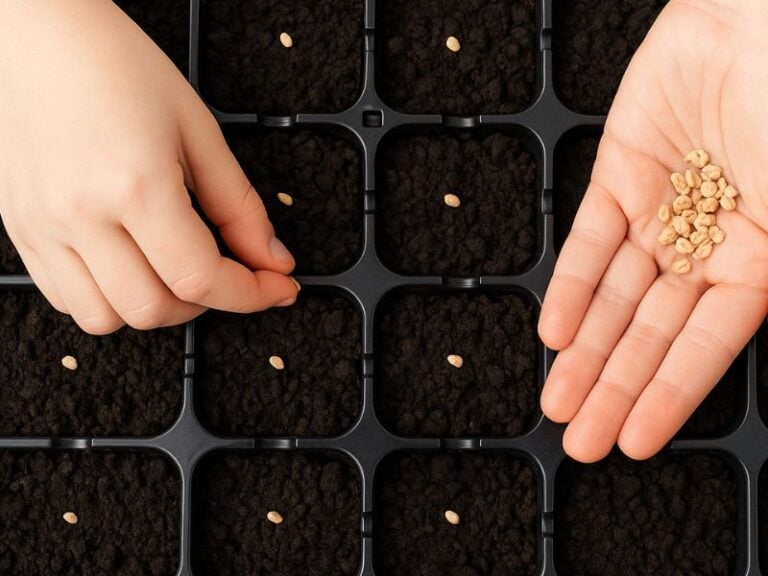
Those just starting out with seed starting surely have a thousand questions buzzing in their heads. Even veteran gardeners don’t remember every detail by heart. That’s why we’ve put together three handy cheat‐sheet tables you can print and peek at whenever you need.
So, if you need to know when to sow your seeds, how many hours a day to light those seedlings, and what the ideal temperature ranges are for the main seedling crops, you’ve come to the right place.
Seedling Growing Timelines
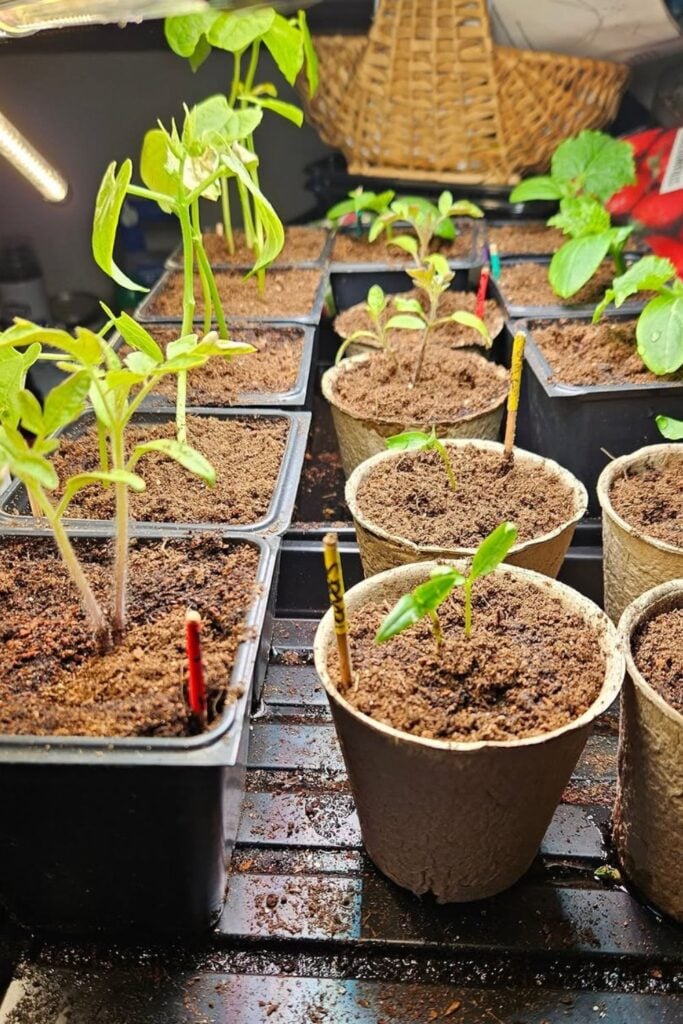
How do you figure out the exact day to sow seeds for seedlings? Some veggie growers rush to sow in February to get an early harvest. But not every crop needs such a long lead time.
For example, February‐sown tomato seedlings often end up spindly, stretched out, with long spaces between leaves. To avoid wasting your efforts, it’s best to calculate the perfect sowing date in advance.
Usually, seed packets list the recommended seedling age for transplanting. All that’s left is to decide on your transplant date and factor in germination time. Let’s say you plan to move tomatoes into a greenhouse on May 8.
You know tomato seeds take about 5–8 days to sprout, and the packet recommends 50 days of seedling growth before transplanting.
Great! Count back 55–58 days (seedling age plus germination) from May 8 and you land around March 12. Simple!
If your seed packets don’t mention seedling timelines, don’t worry. Use our reference table instead.
Approximate Seedling Timelines for Various Crops
| Crop | Seedling Age Before Transplant (days) | Days to Emergence in Optimal Conditions |
| Watermelon | 20–25 days | 3–7 days |
| Basil | 45 days | 5–7 days |
| Eggplant | 50–60 days | 7–10 days |
| Cantaloupe | 20–25 days | 3–7 days |
| Strawberry | 50–70 days | 10–30 days |
| Zucchini | 20–25 days | 2–4 days |
| Cabbage | 45 days | 3–4 days |
| Potato (True Seed) | 30–40 days | 5–8 days |
| Leek & Onion | 50–60 days | 5–7 days |
| Cucumber | 20–25 days (outdoors) 30–35 days (greenhouse) | 2–4 days |
| Pepper | 50–60 days | 7–10 days |
| Celery | 60–70 days | 7–10 days |
| Tomato | Tall varieties: 50–60 days Mid‐size: 50–55 days Bush (determinate): 40–45 days | 5–8 days |
| Pumpkin | 20–25 days | 2–4 days |
Lighting Duration for Seedlings
Each crop has its own sweet spot for light versus dark hours. You might be juggling several crops on one shelf—just aim for the thirstiest light lover.
Daily Light Recommendations by Crop
| Crop | Hours of Light per Day |
| Tomatoes | 14–16 hours |
| Peppers | 14–16 hours until four true leaves, then 10–12 hours |
| Eggplants | 14–16 hours until four true leaves, then 10–12 hours (cover with opaque material from 6 PM until morning) |
| Cabbage | 10–12 hours |
| Strawberry | 12 hours for the first 1½ months after emergence, then no extra light needed |
| Onion | No supplemental light needed |
| Potato (True Seed) | 10–12 hours |
| Watermelon & Cantaloupe | 10–12 hours |
| Celery | 16–18 hours until the second true leaf, 14–16 hours until the fourth true leaf, then 10–12 hours |
| Cucumber, Pumpkin, Zucchini, Pattypan | No supplemental light needed |
Important! These values are the total light hours per 24 hours. Seeing “16 hours” doesn’t mean your plants must bask under a lamp all day. It depends on where you grow them.
If your seedlings sit on a dark windowsill or a standalone rack, you’ll need artificial light for the full light period—in our example, all 16 hours.
But if they’re on a bright windowsill, run lamps for a few hours before sunrise and a few hours at dusk.
On cloudy days, top up natural light the same way. Wondering if they need more light? If the room feels dim without your regular lamp, those seedlings are craving more, too!
Optimal Seedling Temperatures
Maintaining the perfect temperature is a gardener’s headache—few follow it to the letter, but we should at least aim for it.
First rule: don’t stick a tray of just‐sown seeds on a radiator “to speed things up,” but don’t leave pots on a chilly sill, either.
Keep a thermometer where you raise seedlings. If it’s too cold, prop seedlings up on old books, wrap trays in blankets, or similar fixes.
If it’s too warm, crack a window—even just a bit—to cool things down.
Temperature Guidelines for Germination & Growth
| Crop | Germination Temp (°F) [°C] | Daytime Growth Temp (°F) [°C] | Nighttime Drop (°F) [°C] |
| Tomatoes | 64–77 °F (18–25 °C) | 68–77 °F (20–25 °C) | 59–64 °F (15–18 °C) |
| Peppers | 68–77 °F (20–25 °C) | 68–77 °F (20–25 °C) | Not recommended |
| Eggplants | 68–77 °F (20–25 °C) | 68–77 °F (20–25 °C) | Not recommended |
| Cabbage | 59–68 °F (15–20 °C) | 64–68 °F (18–20 °C) | 54–59 °F (12–15 °C) |
| Zucchini & Pumpkin | 64–77 °F (18–25 °C) | 68–77 °F (20–25 °C) | Not recommended |
| Cucumber | 68–77 °F (20–25 °C) | 68–77 °F (20–25 °C) | Not recommended |